Skip to content

The question

How much rewriting or revision do you typically do?

Originally asked

The Paris Review, to novelists and poets, The Art of Fiction

A recurring Art of Fiction craft question, sometimes asked about daily rewriting and sometimes about the number of drafts.

You answer as yourself. Nobody on FLAPSS answers as anybody else.

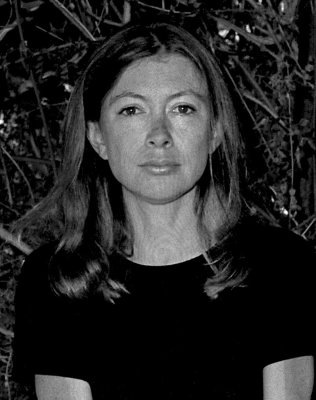
Joan Didion

American writer

Recorded said elsewhere, not written here
It happens in the course of writing. I can’t go on if it’s not pretty much the way that it should be. Towards the beginning of a book, I will go back to page one every day and rewrite. I’ll start out the day with some marked-up pages that I have marked up the night before, and by the time you get to page, maybe, 270, you are not going back to page 1 necessarily anymore, but you’re going back to page 158 and starting over from there.

Academy of Achievement interview, 2006 source ↗

Others on this question

View all 46 →
In the same way that I’m rigid about my routine, I’m very rigid about how editing works. I like to start at the top. I can’t write the fourth session before I write the first. I basically have to write it in order, and I can’t really do rough drafts. I have to like the first section, and the shape it’s in before I move to the second one. So basically, everyday I just start at the top, and go down, and hopefully I get further and further down every day. But I generally can’t start in the middle, or be like, “Eh, that section’s a little wonky, but I’ll get back to it.” I kind of need to shore it up, and edit it, and polish it as I go along. And then you give it to an editor, and you start all over again.
Recorded Brandon Stosuy, The Creative Independent interview, 29 November 2018 source ↗
Khaled Hosseini Afghan-American novelist
So I use the first draft purely as a frame on which to build the actual story. So a lot of my writing is done through rewriting. And I don’t become discouraged by the notion that my first draft is not going to win any prizes or that it’s not going to be — I understand that it’s going to be lousy, but I want all of the essential elements to be there. The heart of the story has to be in that first draft, and then I can use that to create something and discover things about the story. When I wrote, for instance, The Kite Runner , there were a lot of things in that first draft that stayed, but some things in that first draft were tossed, and the transformation in some passages were very dramatic. I wrote an entire draft where the two kids were not brothers, and it really wasn’t until a subsequent draft when I realized that the kids, suddenly the idea came — well, what if the kids are brothers, and that changed the whole tone of the story. And when I rewrote it, writing it with that knowledge, it changed everything. And so you can get discouraged. Writing is largely about rewriting, and I abhor writing the first draft. I love writing subsequent drafts because that’s when I can see the story getting closer and closer to what I intended and what my original hopes for it were.
Recorded Academy of Achievement interview, 2008 source ↗
Lauren Groff writer, bookseller
No, I’m never worried that I’m going to forget anything from a previous draft. It’s not that I don’t forget good things, but I think that often we fetishize what has been done to the detriment of the larger design. I think sometimes we fall in love with a paragraph, even a chapter or a character, and ultimately, those things don’t necessarily add to the book at hand. I actually see it as this beautiful process of almost whittling away. I know it seems counterintuitive, but if I do remember something and it does come into the book in the next draft and I never look at my previous draft, then it probably deserves to be there.
Recorded Scarlett Harris, The Creative Independent interview, 27 November 2024 source ↗
Rax King Writer
In order to end up with anything you can use, you have to excavate a whole bunch of stuff you can’t use, and get it all out of your system, and then go back later and chip away at all the terrible stuff that you’ve uncovered, and find the things that go together, ideas that go together, and motifs that feel like they keep coming up; and then, reassemble a piece of writing that way. That’s also what I do for my own stuff.
Recorded Shy Watson, The Creative Independent interview, 21 December 2021 source ↗

More from Joan Didion

View profile →

More on craft & work

Also answered this

Jia Tolentino, Chloe Benjamin, Eugene Marten, Carlos Fuentes, Kristen Radtke, Kazuo Ishiguro

Search the directory for somebody in particular.

Explore further

Report this answer