The question

How do you know when a piece of work is finished?

Originally asked

The Creative Independent, to working artists, its interview series

A repeated process question in The Creative Independent, asked across visual art, music, writing, performance, and mixed media.

You answer as yourself. Nobody on FLAPSS answers as anybody else.

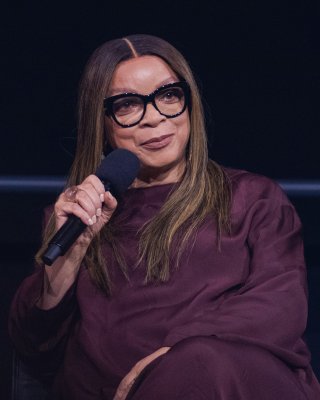
Ruth E. Carter

Costume designer for film and television

Recorded said elsewhere, not written here
I don’t dwell on things. When it rings and it feels good, I move on. I have so much to do, I have so many marks to hit, so many deadlines in front of me… People don’t realize the layers that are involved in one costume alone — and I do hundreds in one film. So I have to move in a space that’s in flow. When things feel like they are right and they are in the flow of the story and I can present them to the director and get feedback, I am really ready to move on. I could return to it and change it and change it again and go down that slippery slope, but it wouldn’t be prudent of me to keep changing things.

The Talks, 19 May 2021 source ↗

Others on this question

View all 76 →
André Aciman Writer and professor
Well, if you write the way I do, which means that you start something and you rewrite it, especially the beginning part, you rewrite it time and time and time again, at some point you feel, not that it’s beyond repair, but that there’s nothing more you can do to fix it. In other words, as far as you’re concerned, that’s what you were going to write.
Recorded Maddie Crum, The Creative Independent interview source ↗
Hanif Abdurraqib American poet and essayist
I move back and forth. The Tribe book is easier. I have a proposal and a plan for that, so it’s easier to know when that’s done because there’s a hard end. There’s a certain amount of chapters, and that whole thing. But poetry books, at least in my experience, those tell you when they’re done. My first book told me when it was done. It told me when I had mined everything I could out of the emotional landscape I was trying to create, and it pointed me to an exit strategy. With poetry books, I have been lucky to have my poems do that. My poems tell me how they want to live in the world, when they want to live in the world, and when they’re done being played with… Sometimes, it’s over the course of a month with one poem, or sometimes it takes a little longer than that. I think the hard work is knowing when to pull yourself back so you don’t overextend or let your projects blend together.
Recorded Brandon Stosuy, The Creative Independent interview source ↗
Willa Bennett Magazine editor in chief and poet
You just have to call it eventually. [For example,] technically speaking, yes, our September Issue is done. It has shipped. But do I feel finished with it? Never. We were ambitious with this issue—we decided we couldn’t platform just one, “face of fashion” and instead went with three exciting covers who each have added something unique to the conversation about style. Having one solid image for a magazine cover is one thing, but it’s another to say something through three rich stories. It was an exciting challenge, and I give my incredible team a lot of credit for their dedication and endless hours. I can’t wait for you to see it.
Recorded Madeline Howard, The Creative Independent, 17 August 2023 source ↗
Claire L. Evans American singer, writer and artist
That’s a really good question. I don’t think you ever know; you just have to make a call. Finishing is acknowledging that there’s no further progress to be made at the current juncture. If you sit on a song for 20 years and come back to it with all the wisdom of your life, you could probably write a better song, but objectively, you have to get it out into the world in order to continue to live as an artist. So, there’s a sense of: “well, this is as good as it’s gonna get for me at my level right now.” Sometimes you realize that early, but it can take a long time. I think deadlines were invented by God to make art possible. I don’t think I could finish anything without a deadline, self-imposed or external. With the book, it was just: these people at Penguin, they don’t know me. They have no idea that I can’t do this. I have to do it because otherwise they’ll know that I can’t do it.
Recorded Kailee McGee, The Creative Independent interview source ↗

More on craft & work

Also answered this

Taja Cheek, Lauren Groff, André Aciman, Laurel Halo, Sam Amidon, Koho Yamamoto

Search the directory for somebody in particular.

Explore further

Report this answer