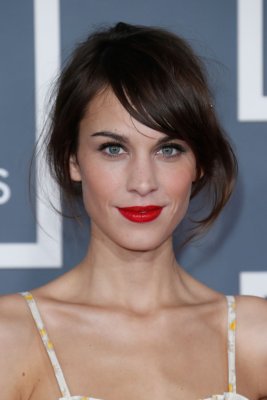
I won't allow people's shit limit what I do.
Laura Brown, harper by Harper's BAZAAR, Harper's Bazaar, 9 February 2015 source ↗
I won't allow people's shit limit what I do.
Laura Brown, harper by Harper's BAZAAR, Harper's Bazaar, 9 February 2015 source ↗
Our trouble is that we do not demand enough of the people who represent us. We are responsible for their activities… we must spur them to more imagination and enterprise in making a push into the unknown; we must make clear that we intend to have responsible and courageous leadership.
Under the stress of the event, we felt, the soldiers' true nature would reveal itself, and we would be able to tell who would be a good leader and who would not. But the trouble was that, in fact, we could not tell. Every month or so we had a "statistics day," during which we would get feedback from the officer-training school, indicating the accuracy of our ratings of candidates' potential. The story was always the same: our ability to predict performance at the school was negligible. But the next day, there would be another batch of candidates to be taken to the obstacle field, where we would face them with the wall and see their true natures revealed. I was so impressed by the complete lack of connection between the statistical information and the compelling experience of insight that I coined a term for it: "the illusion of validity."
And in all of that time I won a nickname, ``The Great Communicator.'' But I never thought it was my style or the words I used that made a difference: it was the content. I wasn't a great communicator, but I communicated great things, and they didn't spring full bloom from my brow, they came from the heart of a great nation -- from our experience, our wisdom, and our belief in the principles that have guided us for two centuries.
The press and the public have created an image of Ed Hillary, hero and explorer which simply doesn’t exist. They’ve painted a picture of me as a heroic type, full of enormous courage, tremendous strength, undying enthusiasm and all the rest of it. But it’s all really just a story, that’s been written up in the newspapers. I’m a person, as I’ve said, of modest abilities, with a good deal of determination, and I do quite a lot of planning ahead. With careful planning and good motivation, I think you can often achieve things that other much more talented people would probably do much more easily.
I love curating things in general. I love writing. It might actually be the solution to my problem, my dilemma that I don't know what to do. It's because I like to do everything. I like to appease that nature of wanting to dabble in things.
Forgetfulness. I leave valuable possessions scattered around the globe.
Realising adults don't know everything.
I don't ever want to stop learning. And I really want to learn French fluently.
As someone who inspired women to dress for themselves.
I was filming T4 at T in the Park one year, and one person kept shouting, "Popworld cunt" at me. That sucked.
David Hockney, Aaron Ciechanover, Richard Ford, Frederick Douglass, Marjane Satrapi, Satya Nadella
Search the directory for somebody in particular.