Skip to content

The question

What lesson has mattered most in your life?

Originally asked

The Guardian, to a different person each week, The Q&A

Verbatim recurring item in The Guardian Q&A; two fully readable publisher-hosted respondent pages establish institutional recurrence.

You answer as yourself. Nobody on FLAPSS answers as anybody else.

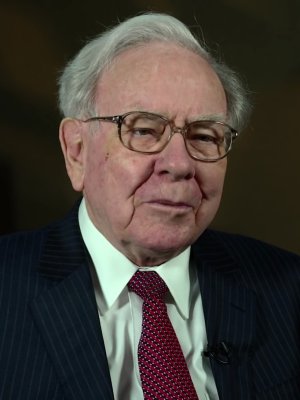
Warren Buffett

Chairman and chief executive of Berkshire Hathaway, 1970–2025

Recorded said elsewhere, not written here
The number one rule I give them is just not give them the golden rule. Do unto others, I'm not a religious guy, but, I mean, nobody said it any better in a couple thousand years than that, which may be why it's lasted to a certain degree too. I mean, more people are reading a 2000-year-old book about how to behave than anything that anybody's coming up with lately. Now it's got a lot of, particularly the Old Testament, it's got different kinds of stories, to some extent, but if the whole world lived by the golden rule, it would be such a more wonderful society.

Becky Quick, Interview at the 2026 Berkshire Hathaway annual meeting; CNBC's own transcript of its own broadcast, 2 May 2026 source ↗

Others on this question

View all 138 →
Edmund Hillary Mountaineer and explorer; first ascent of Everest, 1953
I think motivation is the single most important factor in any sort of success. Physical fitness is important, technical skill is important, and maybe even the desire for money is important in some respects. But a sort of basic motivation, the desire to succeed, to stretch yourself to the utmost is the most important factor. Certainly in the field of exploration and activity, it’s the thing that makes the difference between someone who does really well and someone who doesn’t.
Recorded Academy of Achievement interview source ↗
Christiane Nüsslein-Volhard Developmental biologist; Nobel laureate in Physiology or Medicine, 1995
Not really. I thought that getting the Nobel Prize was a big interruption in my career, I thought and it was very distracting. It takes a lot of time you know, it just takes time to be honoured, you have to travel and you have to give speeches of things you have, oh it’s so often that you get bored to tears when you hear your own voice. And it’s really taking a lot of your time and there’s no way that during this time you can start something new, I mean you just profit from what you’ve done and there is no time to develop new ideas.
Recorded Marika Griehsel, Interview at the 53rd Lindau Nobel Laureate Meeting, 30 June–4 July 2003, Nobel Prize Outreach, 1 July 2003 source ↗

More from Warren Buffett

View profile →
Question What bad recommendations do people in your field repeat too often? Craft & work
Most investors, of course, have not made the study of business prospects a priority in their lives. If wise, they will conclude that they do not know enough about specific businesses to predict their future earning power. I have good news for these non-professionals: The typical investor doesn't need this skill. ... The goal of the non-professional should not be to pick winners – neither he nor his "helpers" can do that – but should rather be to own a cross-section of businesses that in aggregate are bound to do well. A low-cost S&P 500 index fund will achieve this goal.
Recorded Berkshire Hathaway annual shareholder letter, Berkshire Hathaway Inc., 28 February 2014 source ↗
Question Which thinking habit do you wish you could break? Craft & work
Ironically, though, this is also the purchase in which I made my biggest mistake - of a kind, however, never recognized on financial statements. We paid $600 million in 1989 for Gillette preferred shares that were convertible into 48 million (split-adjusted) common shares. Taking an alternative route with the $600 million, I probably could have purchased 60 million shares of common from the company. The market on the common was then about $10.50, and given that this would have been a huge private placement carrying important restrictions, I probably could have bought the stock at a discount of at least 5%. I can't be sure about this, but it's likely that Gillette's management would have been just as happy to have Berkshire opt for common. But I was far too clever to do that.
Recorded His letter to Berkshire Hathaway shareholders in the 1995 annual report, Berkshire Hathaway Inc., February 1996 source ↗
Question What has life taught you about being human? Values & belief
Well, I won't say what I thought about them, particularly related to Bill Gates, but I would say it's astounding to me how human people are. I mean, it, here you had a guy that was a convicted guy, a sensational con man, and the percentage of people that he knocked off. I mean, whether it was, he found their weakness, it might have been sex. It might be power, it might be, whatever it might be.
Recorded Becky Quick, CNBC “Squawk Box”, recorded in Omaha; CNBC's own transcript of its own broadcast, 31 March 2026 source ↗
Question Who makes your work possible behind the scenes? Craft & work
We have two pieces of regrettable news this year. First, Gladys Kaiser, my friend and assistant for twenty-five years, will give up the latter post after the 1993 annual meeting, though she will certainly remain my friend forever. Gladys and I have been a team, and though I knew her retirement was coming, it is still a jolt.
Recorded His letter to Berkshire Hathaway shareholders in the 1992 annual report, Berkshire Hathaway Inc., February 1993 source ↗

More on time & hindsight

Also answered this

Derek Sivers, Charlie Munger, Gino D'Acampo, Bobbi Brown, Ben Okri, Sofia Coppola

Search the directory for somebody in particular.

Explore further

Report this answer