Skip to content
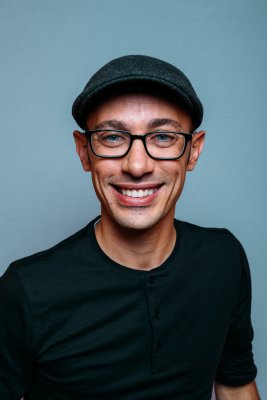
Tobias Lütke

Co-founder and chief executive of Shopify

Recorded said elsewhere, not written here
So, look, I read lots of books, lots of them, you know, especially when I went from programmer to a business, realizing I have to just learn business really quick. I got really dismayed with the quality of business books pretty quickly, because frankly, I think the business books are largely written by the people who have time, who are not the people who actually build companies, frankly.

David Senra, David Senra's podcast, David Senra (published episode transcript), 2026 source ↗

Others on this question

View all 32 →
Muhammad Yunus Founder of Grameen Bank; Nobel Peace Prize laureate, 2006
I am in favor of strengthening the freedom of the market. At the same time, I am very unhappy about the conceptual restrictions imposed on the players in the market. This originates from the assumption that entrepreneurs are one-dimensional human beings, who are dedicated to one mission in their business lives − to maximize profit.
Recorded Nobel Peace Prize lecture, Oslo City Hall, The Nobel Foundation, 10 December 2006 source ↗
David Vélez Co-founder and chief executive of Nubank
The second thing there was another thing I learned at Sequoia is that the culture of a business is built in the first six months by the first ten to 15 employees. These are magical, really, really important times. And I used to hear a lot even at Sequoia, a lot of entrepreneurs saying, “Hey, I'm too busy to think about culture. When we become a unicorn, when we grow, I'll worry about culture.” And for whoever has kids, it's almost like saying I'm too busy about educating my kids. When they turn 18, then I'll figure it out. Too late.
Recorded John Waldron, Goldman Sachs Talks, Goldman Sachs (official event transcript) source ↗
Michael Phelps United States swimmer, 2000–2016
I think it's something that nobody's really talked about in the past because we're supposed to be this big, macho, strong person that has no weaknesses. You know, we're supposed to be perfect.
Recorded CBS News, 25 January 2018 source ↗
Richard Feynman Theoretical physicist; Nobel laureate in Physics, 1965
For example, I was a little surprised when I was talking to a friend who was going to go on the radio. He does work on cosmology and astronomy, and he wondered how he would explain what the applications of this work were. "Well," I said, "there aren't any." He said, "Yes, but then we won't get support for more research of this kind." I think that's kind of dishonest. If you're representing yourself as a scientist, then you should explain to the layman what you're doing—and if they don't want to support you under those circumstances, then that's their decision.
Recorded Caltech commencement address, Pasadena, California, Caltech Engineering and Science (Caltech Library archive), 1 June 1974 source ↗

More from Tobias Lütke

View profile →
Question What is the worst advice you followed anyway? Failure & regret
So I really tried everything, including, you know, just how to build the team in such a way that I delegate everything, and I have my different business lines, and arrange things. This is sort of after the IPO, and I realized I have to be a very “serious” public company CEO. And so it almost killed the company, honestly.
Recorded David Senra, David Senra's podcast, David Senra (published episode transcript), 2026 source ↗

More on craft & work

Also answered this

David Vélez, Steve Jobs, Daniel Ek, Drew Houston, Reid Hoffman, Tony Fadell

Search the directory for somebody in particular.

Explore further

Report this answer