Skip to content

The question

Whose work do you read even when you disagree with them?

Originally asked

Vox, to writers and thinkers, 9 Questions, 2017

Vox used this as one of nine fixed questions in its 2017 series on intellectual habits.

You answer as yourself. Nobody on FLAPSS answers as anybody else.

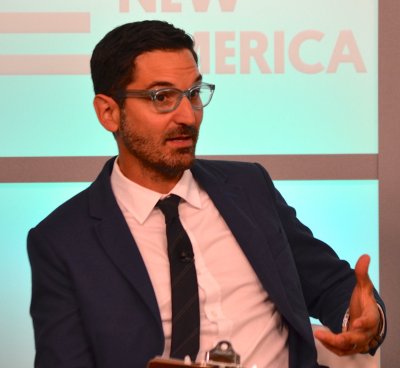
Guy Raz

Radio journalist and podcast host

Recorded said elsewhere, not written here
I don’t think there is a better journalist than Hitchens writing in English. The power of his arguments – they’re so crisply written, they’re so forceful that, if you are on the other side, they almost strangle you. There’s nobody more compelling to read. Every time I read him, I learn something from him. His arguments are so tight, they’re hermetic. It’s very difficult to take them apart. I certainly don’t agree with him a lot of the time, but you can’t but be in awe of the way he can build an argument.

Five Books interview, published transcript source ↗

Others on this question

View all 26 →
Skye C. Cleary Philosopher and author of Existentialism and Romantic Love
It’s short. About 50 pages. I don’t agree with everything she says because, despite her interlocutor and friend being homosexual, she makes a few homophobic comments. I chose this book because it’s witty and fun, it raises some fundamental questions about the nature of love, and also it’s a fascinating insight into society at the time.
Recorded Nigel Warburton, Five Books interview, published transcript, 3 September 2018 source ↗
Adam Gopnik Staff writer at The New Yorker; essayist
Writers we think are all wrong and want to read anyway come in two kinds: those who are good writers and bad thinkers — Christopher Hitchens, Norman Podhoretz, and Gore Vidal, each in his terribly different way, are instances of that — and those who may not be original stylists but who we admire for trying to be better thinkers than they were before, stumbling toward truth from a starting place very different from the one we happened to inherit. I disagree, for instance, with David Frum about almost everything, from Iraq to the legacy of Pierre Trudeau in our native Canada, but never doubt his integrity or desire to tell the truth about the world.
Recorded Sean Illing, Vox, “9 questions” series, 16 September 2017 source ↗
Richard White Margaret Byrne Professor of American History, Emeritus, Stanford University
But Wiebe didn’t have the evidence to sustain many of the assertions that fed his thesis. Many of the things which he said happened in the Gilded Age had happened earlier and other things didn’t happen at all. Nonetheless, it’s a great feat of storytelling to fit so many disparate details into a simple framework. Even though I disagree with Wiebe, I always keep my eye on The Search for Order as a model of historical writing.
Recorded Eve Gerber, Five Books interview, published transcript, 26 March 2021 source ↗
I often hate-read the Daily Mail. It’s the worst of media and the worst of mankind distilled into one publication and in some ways it feels a moral duty to be familiar with it. Too often we all bolt ourselves into an echo chamber, which I think lacks courage, and can lead to a kind of intellectual conceitedness.
Recorded Sean Illing, Vox, “9 questions” series, 26 August 2017 source ↗

More on attention & the world

Also answered this

Skye C. Cleary, Adam Gopnik, Beth Breeze, Alain de Botton, Richard White, Lisa Randall

Search the directory for somebody in particular.

Explore further

Report this answer