The question

How much rewriting or revision do you do?

Originally asked

The Paris Review, to novelists and poets, The Art of Fiction

A recurring Art of Fiction craft question, sometimes asked about daily rewriting and sometimes about the number of drafts.

You answer as yourself. Nobody on FLAPSS answers as anybody else.

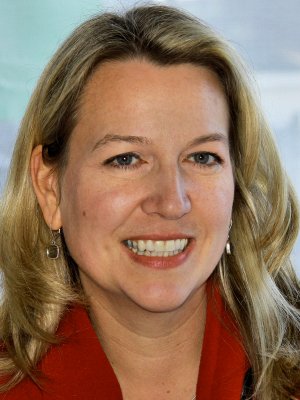
Cheryl Strayed

Author of Wild and Tiny Beautiful Things

Recorded said elsewhere, not written here
I think revising is the same as writing, at least when it comes to the essential truths I wrote about in “Write Like a Motherfucker.” It’s all work. It’s all part of the process. Writing and revision are not two entirely different things, even though they demand slightly different things of us.

Elissa Bassist, Creative Nonfiction source ↗

Others on this question

View all 60 →
Ahmed Zewail Chemist; Nobel laureate in Chemistry, 1999
It is known about me that I’m serious and that when you write a paper I like, I will sometimes have you go up to ten or twelve versions of the paper.
Recorded Heidi Aspaturian, Caltech Oral History Project, Caltech Archives Oral History Project, 2015 source ↗
Well, I can’t really work any miracles in revision , like some people can. I don’t always advocate this to students, but I don’t really have a problem just putting something aside. I don’t actually throw it away, because I have the file, but just saying, “You know what, this is not savable. It’s just not interesting to me.” I’m not someone who can systematically chip away at something that’s dead and make it better. I’ll sometimes break things down into parts and think, “Well, this was a 25-page story and it’s just really bad, but there’s a page and a half here that I could sort of use in something one day.” Revision for me is really only something I can get excited about if I can make something better.
Recorded Maddie Crum, The Creative Independent interview, 24 October 2018 source ↗
Tayi Tibble New Zealand poet
I actually really love editing poetry. It’s my favorite part. I love how you can change just one word and it suddenly elevates the line or even the whole poem. When I’m writing poetry, I’m looking and reading through and I’m really interrogating each word and trying to figure out: Is this the best word? Is this exactly what I’m trying to say at this moment? And I do a lot of reading aloud because cadence and rhythm are really important to me. I try to feel where the lines are sitting or where the stresses are, where the hits and the rhythm are. I also like to use those read-aloud functions on the computer because I feel like if it can still sound somewhat bearable with this monotone voice reading it, then that’s probably going to be alright—it’s the final test.
Recorded Shy Watson, The Creative Independent interview source ↗
First, I do two longhand drafts, and those are complete drafts. Every word is gone over and considered. The third draft is when I start typing, but it’s the same process again. The whole thing is reread. I think after three or four, I start to be able to be satisfied with certain sections. And then I start concentrating on things that just are more problematic, that are going to be a tough nut to crack, probably for the duration of the process. But that doesn’t mean that I won’t come back to things and have an “aha” moment, or say, “Oh, wait a minute, this sucks. I thought it was okay, but I found a better way to do it.”
Recorded Elle Nash, The Creative Independent interview, 6 February 2025 source ↗

More from Cheryl Strayed

View profile →

More on craft & work

Also answered this

Edward Albee, Lucy Ives, Ursula K. Le Guin, Claudia Dey, Lillian Li, Melissa Febos

Search the directory for somebody in particular.

Explore further

Report this answer