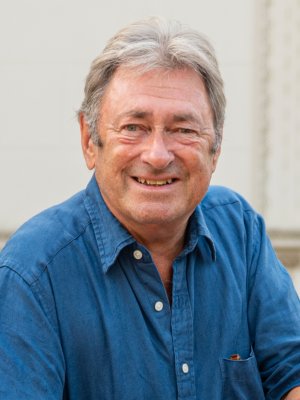
Foolhardiness. I wrote two chapters and a synopsis, sent it off to a publisher, and it sold. That's what emboldened me to continue.
Emine Saner, Question time, The Guardian, 23 September 2009 source ↗
The question
How does a new work begin for you?Originally asked
The Paris Review, to novelists and poets, The Art of Fiction
A recurrent craft question in The Paris Review's Art of Fiction interviews; wording varies between character, theme, first sentence, image, and idea.
You answer as yourself. Nobody on FLAPSS answers as anybody else.
Foolhardiness. I wrote two chapters and a synopsis, sent it off to a publisher, and it sold. That's what emboldened me to continue.
Emine Saner, Question time, The Guardian, 23 September 2009 source ↗
what is the seed? What is this that's been given to me?
It’s funny. Before, it used to be that I’d travel somewhere. I always had a storyline, some kind of grounding element. I used to go somewhere and just take over a space and go find things and find elements. That was how I used to do it. But since I had Cyrus I’ve had to do things only in the studio and shift it, so it’s very different for me now. I’m constantly writing in my book and coming up with things, mostly from things I read. I have all these ideas and I just write them and then some make it out. Most of them don’t. I was reading [Jorge Luis] Borges’ Labyrinths about six months ago. That really spoke to me, and that’s when I started doing the [painting series titled] Endless Sunsets. It’s like a labyrinth, something you can never get out of and there’s really no point in it, a brain maze kind of thing.
This poem—I still remember the emotion which accompanied its beginnings, actually just the birth of the line “try to praise the mutilated world”; it happened in a train in Germany, I think (trains are good for inspiration, sometimes). It was for me a simple juxtaposition of two contrary deeply felt convictions.
Obviously, it’s different for everyone. And actually there is a difference for each thing I do. But one way it happens is to just move. [ laughs ] I mean, obviously, you don’t just sort of randomly throw yourself around the room. You move with these ideas and sometimes I find that I’ve already got images in my head that I imagine my body in, or sometimes I have sequences in my head. I think a lot of time I’m listening to what comes next because sometimes the body will tell you that. Often I don’t document it too early in the process because sometimes if you forget stuff it’s worth knowing that the things that you forget maybe weren’t worth keeping. The things that have settled are the things that need to be kept because they seem most urgent. I don’t know. I mean, sometimes it’s about going to the studio and nothing happens for a long time and you just sit there and you’re not feeling it. That’s awful. It’s like when you’re writing and sometimes you go to the coffee shop and you’re like, “So, we’ll just see what happens.” And you end up on Facebook. I think the answer to this is… I really think the answer to this is I don’t know. [ laughs ]
Alan Bennett. He's enormously good company, very funny, generous with his time, frighteningly intelligent - and a Yorkshireman.
I try to be a Sherlock Holmes of botany. It's not enough to enjoy plants – I want to know why they are wilting, to work things out.
My old French teacher Madame Hawksworth stopped me in Ikley car park and said, 'We never thought you'd amount to much.'
Rudeness, arrogance and inability to compromise.
Specialisation leads to extinction. We are learning more and more but about less and less, and one day we will know everything about nothing. There is nothing wrong with being a populist. It does not have to mean dumbing down, as people think.
I like moronic jobs like mowing. I like looking back and admiring the stripes I've created on the lawn.
John Banville, Ernest Greene, Richard Ford, Tavares Strachan, Ursula K. Le Guin, Ron Gorchov
Search the directory for somebody in particular.