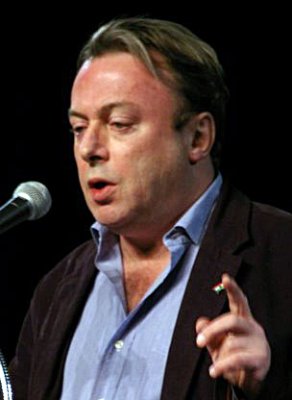
My chief consolation in this year of living dyingly has been the presence of friends. I can’t eat or drink for pleasure anymore, so when they offer to come it’s only for the blessed chance to talk. Some of these comrades can easily fill a hall with paying customers avid to hear them: they are talkers with whom it’s a privilege just to keep up. Now at least I can do the listening for free. Can they come and see me? Yes, but only in a way. So now every day I go to a waiting room, and watch the awful news from Japan on cable TV (often closed-captioned, just to torture myself) and wait impatiently for a high dose of protons to be fired into my body at two-thirds the speed of light. What do I hope for? If not a cure, then a remission. And what do I want back? In the most beautiful apposition of two of the simplest words in our language: the freedom of speech.
Managed profile
Not claimed by Christopher Hitchens
Christopher Hitchens has not joined FLAPSS and has not endorsed it. This page is a reference record assembled from published interviews and public remarks. Every answer below is a direct quotation with the source and date shown next to it.
Christopher Hitchens
Essayist, critic and journalist
United Kingdom · 1949–2011
Arts and letters
About
British-American essayist, literary critic and polemicist, a columnist for Vanity Fair, The Atlantic and Slate and the author of God Is Not Great. Diagnosed with stage four oesophageal cancer in June 2010 while on tour for his memoir Hitch-22, he wrote a sequence of essays about his own dying for Vanity Fair until shortly before his death in December 2011; they were collected as Mortality.
11 answers
Every quotation above is reproduced from the source shown beside it and has not been edited. Christopher Hitchens did not write these answers for FLAPSS. Request a correction or removal.