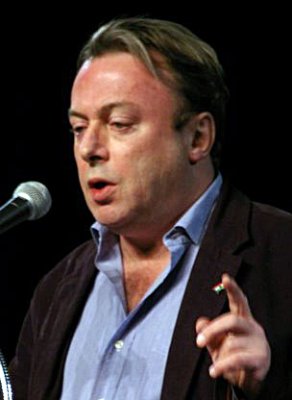
The chief side effect of this pain is numbness in the extremities, filling me with the not irrational fear that I shall lose the ability to write. Without that ability, I feel sure in advance, my “will to live” would be hugely attenuated. I often grandly say that writing is not just my living and my livelihood but my very life, and it’s true. Almost like the threatened loss of my voice, which is currently being alleviated by some temporary injections into my vocal folds, I feel my personality and identity dissolving as I contemplate dead hands and the loss of the transmission belts that connect me to writing and thinking.
Managed profile
Not claimed by Christopher Hitchens
Christopher Hitchens has not joined FLAPSS and has not endorsed it. This page is a reference record assembled from published interviews and public remarks. Every answer below is a direct quotation with the source and date shown next to it.
Christopher Hitchens
Essayist, critic and journalist
United Kingdom · 1949–2011
Arts and letters
About
British-American essayist, literary critic and polemicist, a columnist for Vanity Fair, The Atlantic and Slate and the author of God Is Not Great. Diagnosed with stage four oesophageal cancer in June 2010 while on tour for his memoir Hitch-22, he wrote a sequence of essays about his own dying for Vanity Fair until shortly before his death in December 2011; they were collected as Mortality.
11 answers
There is an even longer shot that I do propose to attempt even though its likely efficacy lies at the outer limits of probability. I am going to try to have my entire DNA “sequenced,” along with the genome of my tumor. ... So perhaps I will be able to contribute a little bit to enlarging the knowledge that will help future generations.
And even if my voice goes before I do, I shall continue to write polemics against religious delusions, at least until it’s hello darkness my old friend. In which case, why not cancer of the brain? As a terrified, half-aware imbecile, I might even scream for a priest at the close of business, though I hereby state while I am still lucid that the entity thus humiliating itself would not in fact be “me.” (Bear this in mind, in case of any later rumors or fabrications.)
I have more than once in my time woken up feeling like death. But nothing prepared me for the early morning last June when I came to consciousness feeling as if I were actually shackled to my own corpse. The whole cave of my chest and thorax seemed to have been hollowed out and then refilled with slow-drying cement. I could faintly hear myself breathe but could not manage to inflate my lungs. My heart was beating either much too much or much too little. Any movement, however slight, required forethought and planning.
Instead, I am badly oppressed by a gnawing sense of waste. I had real plans for my next decade and felt I’d worked hard enough to earn it. Will I really not live to see my children married? To watch the World Trade Center rise again? To read—if not indeed write—the obituaries of elderly villains like Henry Kissinger and Joseph Ratzinger? But I understand this sort of non-thinking for what it is: sentimentality and self-pity.
Every quotation above is reproduced from the source shown beside it and has not been edited. Christopher Hitchens did not write these answers for FLAPSS. Request a correction or removal.