The question

How does a new work begin for you?

Originally asked

The Paris Review, to novelists and poets, The Art of Fiction

A recurrent craft question in The Paris Review's Art of Fiction interviews; wording varies between character, theme, first sentence, image, and idea.

You answer as yourself. Nobody on FLAPSS answers as anybody else.

Ja’Tovia Gary

visual artist and filmmaker

Recorded said elsewhere, not written here
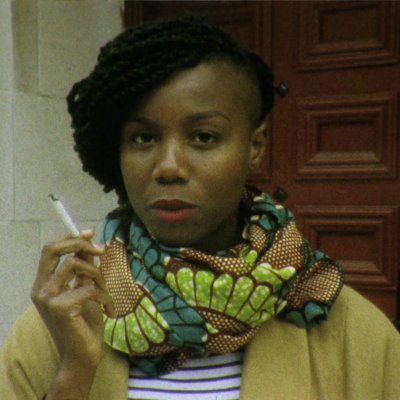
When I start a project, it’s a kind of investigation and curiosity at the beginning. I’m basically culling materials. I’m gathering. A lot of the work takes on a collage aesthetic. So I am thinking through an idea and then gathering all of the supporting documents. In some ways it’s essayistic. I’m attempting to put forth an idea or a thesis. There are assertions that are being made, and what can I use visually, whether it is 16 millimeter film from the past or things that I shoot myself, whether it’s interview that I go out and get, whether it’s me painting on film and creating some sort of abstraction that alludes to or gestures towards the assertion. It’s playtime at the beginning. It’s almost like a very active brainstorming that requires me to go out and find materials as well as make notes, as well as look at footage as well as read. It’s investigative curiosity at the beginning, this phase of questioning and garnering. And at the end it’s instinctual. It’s a sweet spot. There have been times where I’ve gone out and presented something thinking that it’s done and then brought it back. I’ve gotten audience reactions, brought it back, turned it up a little bit, and then it was done. Sometimes my finishing process requires me to see it with a large group of people.

Pola Pucheta, The Creative Independent interview, 14 May 2024 source ↗

Others on this question

View all 86 →
Bells Larsen Canadian singer-songwriter
Concepts can be really freeing in their limitations. I really enjoy when I make rules for myself in my creative practice. Whether that means I’m going to try and write a song without the use of the word “I,” I like having rules in my songs. Even if I don’t follow them exactly, it’s kind of nice to have a very loose guideline. And then when I try to create that universe for myself, I at least can visualize the path that I’m trying to follow.
Recorded Laura Brown, The Creative Independent interview source ↗
I feel some sort of chemistry with the subject.…The bar for me is when it’s interesting enough that I would talk about it on my own time.
Recorded Eva Wiseman, interview, The Guardian, 11 August 2019 source ↗
Ernest Greene musician, visual artist
That’s tough. At this point, with both visual art and music, I’ve done it enough where it’s very much this flow state where I’m not really thinking about any technical stuff. I’m just putting one thing down, and that leads to the next thing, and then you’re off to the races. There’s very little rationalization or any real plan, especially at the very beginning of the project. It’s literally just trying things to see where I can end up. As an album project starts shaping up, there’s a handful of songs or maybe…there’s some parameters in place, and you’re working within that.
Recorded Max Freedman, The Creative Independent interview, 27 September 2024 source ↗
Tavares Strachan Bahamian conceptual artist
Yeah, I think it’s a combination of all those things, really. I think narrative is significant and important to me. And I think most of the narratives that really struck me were about history or were narratives that I received in ways that were abstract, so they were kind of nonlinear narratives that I pulled from, for example, music. You know, music was a huge inspiration to me growing up, I grew up listening to a lot of reggae music, a lot of dancehall, dub. If you listen to that music, I think one of the things you realize is that those particular artists, those legendary artists who were making that music in the ’70s and ’80s, and even to some degree in the ’60s, were really good at provoking you to go on your own journey with the information that they were giving you in the music. For me, one of the things about artistic practice is not about providing some solution, but instead provoking curiosity about some things that you should find on your own and not be led to.
Recorded Amanda Gluibizzi, The Brooklyn Rail, In Conversation, 1 June 2022 source ↗

More from Ja’Tovia Gary

View profile →
Question What do you do when you feel creatively blocked or stuck? Craft & work
I work on other things. There's usually more than one project brewing. I also write. I also listen to talks; I love listening to black feminist thinkers or listening to people read their poetry. What I try to do is fill my arsenal. I'll put this shit down or I'll pick something else up. Like some days, I just take whole days where I "play," and that's where I'll only do production stuff.
Recorded Aye'lesha Gibson, FEMEXFILMARCHIVE, 27 February 2020 source ↗
Question In the last five years, what have you become better at saying no to? Daily life
Certain people really aren’t getting their emails answered. Certain people are getting their emails answered at a very deliberate and delayed rate. There are certain things that I’m passing up that people think that I should be taking, jumping at and clapping over. There’s a certain amount of refusal happening right now because I’ve got to prioritize my health and my ancestral mandates.
Recorded Keisha N. Knight, Filmmaker Magazine, 8 April 2021 source ↗

More on craft & work

Also answered this

David Lynch, Robert Wilson, Andy Serkis, Agnès Varda, Alan Cumming, Alice Sheppard

Search the directory for somebody in particular.

Explore further

Report this answer