Skip to content

The question

Excluding property, what is the most expensive thing you have ever bought?

Originally asked

The Guardian, to a different person each week, The Q&A

The Guardian's weekly The Q&A repeatedly uses this standing prompt, with minor contractions and word-order variation.

You answer as yourself. Nobody on FLAPSS answers as anybody else.

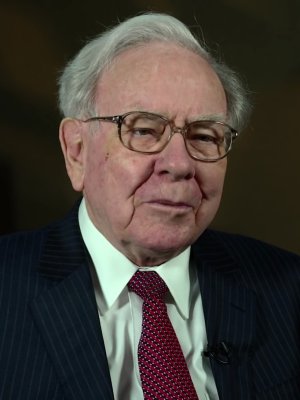
Warren Buffett

Chairman and chief executive of Berkshire Hathaway, 1970–2025

Recorded said elsewhere, not written here
Some material things make my life more enjoyable; many, however, would not. I like having an expensive private plane, but owning a half-dozen homes would be a burden. Too often, a vast collection of possessions ends up possessing its owner.

His own pledge letter, written on joining the Giving Pledge in 2010, The Giving Pledge, 2010 source ↗

Others on this question

View all 198 →
Martin Compston Scottish actor
An ornate carved pool table. With travelling, I’ve not had a game on it in two years.
Recorded The Guardian, The Q&A, The Guardian, 5 March 2022 source ↗
Nadiya Hussain British television chef, baker and author
A very expensive dehydrator (it cost £30). I’ve made raisins, banana chips and apple chips with it so far. It’s so addictive, I’ll probably start drying my kids soon.
Recorded The Guardian, The Q&A, The Guardian, 10 September 2016 source ↗

More from Warren Buffett

View profile →
Question What worries you about getting older? Time & hindsight
I go in every day to the office. I don't accomplish hardly anything. I mean, in terms of – it just takes me way longer to do things. And Greg is so good. It was kind of embarrassing how good he is, because he has covered – you know, we've got about 200 businesses within Berkshire, you know, that came about, and I can't name the manager's names or their wives names, or – and I haven't seen them, you know, in a long time. It's easier just to write the letter once a year and kind of do my own thing. Greg covers more ground in a day than I would in a week, even when I was at my peak, let alone my present condition.
Recorded Becky Quick, CNBC “Squawk Box”, recorded in Omaha; CNBC's own transcript of its own broadcast, 31 March 2026 source ↗
Question What has life taught you about being human? Values & belief
Well, I won't say what I thought about them, particularly related to Bill Gates, but I would say it's astounding to me how human people are. I mean, it, here you had a guy that was a convicted guy, a sensational con man, and the percentage of people that he knocked off. I mean, whether it was, he found their weakness, it might have been sex. It might be power, it might be, whatever it might be.
Recorded Becky Quick, CNBC “Squawk Box”, recorded in Omaha; CNBC's own transcript of its own broadcast, 31 March 2026 source ↗
Question How has a setback or failure set you up for later success? Failure & regret
My first mistake, of course, was in buying control of Berkshire. Though I knew its business - textile manufacturing - to be unpromising, I was enticed to buy because the price looked cheap. Stock purchases of that kind had proved reasonably rewarding in my early years, though by the time Berkshire came along in 1965 I was becoming aware that the strategy was not ideal. If you buy a stock at a sufficiently low price, there will usually be some hiccup in the fortunes of the business that gives you a chance to unload at a decent profit, even though the long-term performance of the business may be terrible. I call this the "cigar butt" approach to investing. A cigar butt found on the street that has only one puff left in it may not offer much of a smoke, but the "bargain purchase" will make that puff all profit. Unless you are a liquidator, that kind of approach to buying businesses is foolish.
Recorded Berkshire Hathaway annual shareholder letter, Berkshire Hathaway Inc., 2 March 1990 source ↗
Question What is one of the best investments you have made — of money, time, or energy? Money & investment
We've just passed a milestone: Twenty years ago, on January 3, 1972, Blue Chip Stamps (then an affiliate of Berkshire and later merged into it) bought control of See's Candy Shops, a West Coast manufacturer and retailer of boxed-chocolates. The nominal price that the sellers were asking - calculated on the 100% ownership we ultimately attained - was $40 million. But the company had $10 million of excess cash, and therefore the true offering price was $30 million. Charlie and I, not yet fully appreciative of the value of an economic franchise, looked at the company's mere $7 million of tangible net worth and said $25 million was as high as we would go (and we meant it). Fortunately, the sellers accepted our offer. The sales of trading stamps by Blue Chip thereafter declined from $102.5 million in 1972 to $1.2 million in 1991. But See's candy sales in the same period increased from $29 million to $196 million. Moreover, profits at See's grew even faster than sales, from $4.2 million pre-tax in 1972 to $42.4 million last year.
Recorded His letter to Berkshire Hathaway shareholders in the 1991 annual report, Berkshire Hathaway Inc., February 1992 source ↗

More on money & investment

Also answered this

Douglas Stuart, Angela Hartnett, Nadiya Hussain, Bella Freud, Julien Macdonald, Sheena Easton

Search the directory for somebody in particular.

Explore further

Report this answer