Skip to content

The question

Do you rely more on inspiration or discipline to make your work?

Originally asked

The Creative Independent, to working artists, its interview series

A repeated Creative Independent tension, asked as inspiration, muse, discipline, ritual, or the requirement to show up.

You answer as yourself. Nobody on FLAPSS answers as anybody else.

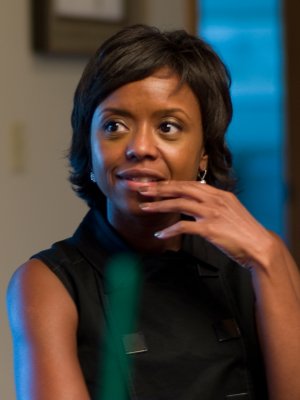
Mellody Hobson

Co-chief executive and president of Ariel Investments

Recorded said elsewhere, not written here
That moving a lot really committed me to stability and committed me to ... being in control of my destiny. That was something that was very important to me. And it also made me very conservative about money.

Farai Chideya, News & Notes, Leading Ladies series, NPR, 22 March 2007 source ↗

Others on this question

View all 27 →
Suzanne Farrell Ballerina and ballet master; répétiteur for the Balanchine Trust
No, never. Strangely enough, being such a tomboy, and being so—as my mother says—spoiled as a child, once I started dancing and in a way growing up, I was not the spoiled brat or the rebellious child that I was when I really had no reason to be as a child. When you work, it’s a laboratory. The dance studio, when we were working together, was the place where you experiment. I’m not intimidated by failure or making a mistake, because you learn from those situations. You don’t learn from a situation where you do something well. You enjoy it and you give yourself credit, but you don’t really learn from that. You learn from trial and error, trial and error, all the time. When you fail, maybe you failed in that particular instance, but you have discovered something else. A lot of the ballets that we went on to do were built around mistakes that we had made in the classroom. So you never throw anything out. Rebelling takes up energy. As a dancer, you don’t have that kind of energy to throw away.
Recorded Academy of Achievement interview, New York City, 16 December 1990 source ↗
Esperanza Spalding Bassist, singer and composer
I don’t remember which writer said this, but in an interview, a prolific novelist was asked, “Do you write only when you’re inspired, or do you write all the time? Do you wait for the muse, or do you just kind of knock it out? You can just sort of spin it out?” And he said, “Well, I do wait for the muse. I write when the muse comes, but fortunately she shows up, like me, every day at 9:00 a.m.
Recorded Academy of Achievement interview, San Francisco, California, 13 September 2014 source ↗
László Krasznahorkai Novelist; Nobel laureate in literature
The bitterness. I am very sad if I think of the status of the world now. This is my deepest inspiration. This could be also an inspiration for the next generation or generations in literature. Inspiration to give something for the next generation, somehow to survive this time because these are very, very dark times and we need much more power in us to survive this time than before.
Recorded Nobel Prize telephone interview with Jenny Rydén, published by Nobel Prize Outreach, The Nobel Prize, 9 October 2025 source ↗
Tiler Peck Principal dancer, New York City Ballet; choreographer
Well, you’re right, I think the hard work definitely paid off. My grandmother drove me three hours to dance and three hours back from age six to age 11. I would do my school work in the car on the way there and then get home at like 11 o’clock at night, five days a week for many years. My training was seriously intense, and nothing came easy. I worked for everything I’ve ever been given.
Recorded The Talks, published interview, 6 July 2022 source ↗

More from Mellody Hobson

View profile →
Question What fills you with the most pride? Identity & self
I literally said to them - all of our faces were on the - in the boxes on Zoom. And I welled up. And I said, oh my God, this is my dream. This is what I want - I've wanted to see my whole life of working at Ariel and all the things we've built, and making sure we all have a shot at this - narrowing this wealth gap, and putting our stamp on the industry and society.
Recorded Kathleen J. McInnis, Smart Women, Smart Power podcast, Center for Strategic and International Studies, 28 August 2024 source ↗
Question What counsel has proved most valuable to you? Time & hindsight
He says: Take your gloves off, Mellody, but use your power for good. He's giving me my hands back. Use your power for good. And I have never - I've used that analogy in all things in my life, something as simple as getting my hands back, using my powers for good in the water but also day-to-day life using your power for good no matter who you are.
Recorded Kathleen J. McInnis, Smart Women, Smart Power podcast, Center for Strategic and International Studies, 28 August 2024 source ↗
Question In the last five years, what new belief, behaviour, or habit has most improved your life? Daily life
I told our Ariel team, we are not going to limp out of COVID. We're going to slingshot out of COVID. We're going to be pulling that rubber band back and back, and we're going to be warehousing ideas, and getting work done, and so when this is over we will pole vault ahead.
Recorded Kathleen J. McInnis, Smart Women, Smart Power podcast, Center for Strategic and International Studies, 28 August 2024 source ↗
Question What has life taught you about being human? Values & belief
I could be strong and not tough. I could be kind without being soft. ... But in that moment, that olive branch of kindness was actually one that became a physical hug, and I think it taught me and the room a lot. And I said: You know what? I think this is an advantage.
Recorded Kathleen J. McInnis, Smart Women, Smart Power podcast, Center for Strategic and International Studies, 28 August 2024 source ↗

More on craft & work

Also answered this

Carlos Slim Helú, Frank O. Gehry, John Updike, Danny Elfman, Arnold Schwarzenegger, Jonathan Lethem

Search the directory for somebody in particular.

Explore further

Report this answer