Skip to content

The question

How does a new piece of work usually begin for you?

Originally asked

The Paris Review, to novelists and poets, The Art of Fiction

A recurrent craft question in The Paris Review's Art of Fiction interviews; wording varies between character, theme, first sentence, image, and idea.

You answer as yourself. Nobody on FLAPSS answers as anybody else.

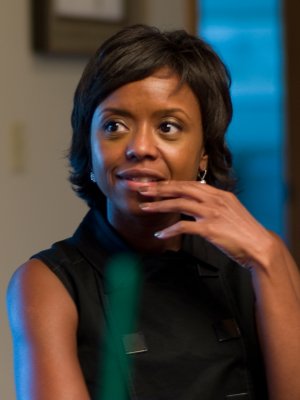
Mellody Hobson

Co-chief executive and president of Ariel Investments

Recorded said elsewhere, not written here
So I started with this idea of could we do private equity totally differently than had been done? One of the major features of what we do is something called demand aggregation, where we go to corporations and what we call the CPO, the purchasing officers of those - chief purchasing officers. We developed a council of Fortune 500 companies.

Kathleen J. McInnis, Smart Women, Smart Power podcast, Center for Strategic and International Studies, 28 August 2024 source ↗

Others on this question

View all 60 →
Clare Sestanovich American writer
I start with the first sentence. A maddening answer, and, for my own sake, I wish I had a better one. But it’s the only way I know how: one sentence on top of the other, one foot in front of the other. In that way, writing does feel exploratory to me. I never start with a map in my head or even a destination. All I have is a sense that I’m heading in an interesting direction.
Recorded Shy Watson, The Creative Independent interview source ↗
Thomas Mars French singer
It’s a funny contradiction because when we started playing instruments as kids, the thing we didn’t want to do was jam. We wanted to have an idea. We wanted structure. Jamming was like this way of sharing the spotlight, where everyone got their own solo, every individual got their own moment to shine. When we were growing up, that’s how we thought of it. Eventually we embraced this more freeform approach. I wouldn’t call it jamming, but maybe it’s more about exploring.
Recorded T. Cole Rachel, The Creative Independent interview source ↗
Chaitanya Tamhane Indian filmmaker
I think the starting point has changed for me over the years. I think with Court , The Disciple and the short film, it was the setting, the world that got me interested. It was very sort of driven by fascination and curiosity, and a very unconditional kind of curiosity, where it’s like, “Let’s just immerse ourselves into this world that we have no idea about.” And hopefully a plot, a certain theme or certain characters will evolve and emerge from there. And now after The Disciple , which takes place in the Indian classical music scene, I want to work even more from sort of an inside-out manner, where it’s the themes, and it’s my concerns, and my worldview that comes first. But then again, there’s no one rule, right? It’s always going to be different for every story, for every film.
Recorded The Talks interview, 22 December 2021 source ↗
At first I’ll think of stuff in my head for a while. The more I think of an idea, the more promising it is— it just naturally occupies space in my brain. Then I start making notes with pen and paper. If it’s a story, it’s more like a moment, or just it’s kind of a more fleeting idea. And if it’s a novel, it’s something that I can see approaching in a lot of different ways, and sticking with for two or three years. I might write a scene or two and just kind of see how it feels. Then I will type an outline. That’s when I really feel like I have a path forward, even though I don’t feel like I have to stick to the outline, but it is very reassuring to me to have it.
Recorded Scarlett Harris, The Creative Independent interview, 29 May 2025 source ↗

More from Mellody Hobson

View profile →
Question What does everyone in your world seem to agree on that you think is wrong? Values & belief
You see, researchers have coined this term "color blindness" to describe a learned behavior where we pretend that we don't notice race. If you happen to be surrounded by a bunch of people who look like you, that's purely accidental. Now, color blindness, in my view, doesn't mean that there's no racial discrimination, and there's fairness. It doesn't mean that at all. It doesn't ensure it. In my view, color blindness is very dangerous because it means we're ignoring the problem.
Recorded TED2014, 20 March 2014 source ↗
Question What counsel has proved most valuable to you? Time & hindsight
He says: Take your gloves off, Mellody, but use your power for good. He's giving me my hands back. Use your power for good. And I have never - I've used that analogy in all things in my life, something as simple as getting my hands back, using my powers for good in the water but also day-to-day life using your power for good no matter who you are.
Recorded Kathleen J. McInnis, Smart Women, Smart Power podcast, Center for Strategic and International Studies, 28 August 2024 source ↗
Question Which teacher, parent, coach, or friend most made you who you are, and what did you learn from them? Relationships
Well, I think I am her in some ways. I grew up with a mother who said anything is possible. She had a grand vision of life and a grand vision for me. And she didn't know what it would be, but she just constantly told me whatever I wanted to do would happen. That's what she felt about her own life, and still does.
Recorded Farai Chideya, News & Notes, Leading Ladies series, NPR, 22 March 2007 source ↗
Question What is one of the best investments you have made — of money, time, or energy? Money & investment
Our business everyday is to make money for people. And I take it as seriously as doctors who are trying to cure cancer, because by giving people financial freedom, we allow them to do great things in their lives - from retire to send their kids to college, to buy their first house, to fund a business that they might want to start.
Recorded Farai Chideya, News & Notes, Leading Ladies series, NPR, 22 March 2007 source ↗
Question If you could put a message on a giant billboard, what would it say and why? Time & hindsight
We cannot afford to be color blind. We have to be color brave. We have to be willing, as teachers and parents and entrepreneurs and scientists, we have to be willing to have proactive conversations about race with honesty and understanding and courage, not because it's the right thing to do, but because it's the smart thing to do, because our businesses and our products and our science, our research, all of that will be better with greater diversity.
Recorded TED2014, 20 March 2014 source ↗

More on craft & work

Also answered this

Jeff Bezos, Sumayya Vally, Buck Meek, Ini Archibong, Ron Gorchov, Jason Williamson

Search the directory for somebody in particular.

Explore further

Report this answer