The question

Do you rely on inspiration or discipline to make work?

Originally asked

The Creative Independent, to working artists, its interview series

A repeated Creative Independent tension, asked as inspiration, muse, discipline, ritual, or the requirement to show up.

You answer as yourself. Nobody on FLAPSS answers as anybody else.

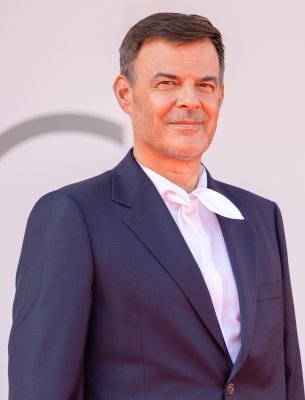
François Ozon

Film director and screenwriter

Recorded said elsewhere, not written here
It’s a long journey, you know. I really believe in the work of the unconscious. You have an idea, you think about it. You dream about it. But, for me, it’s my way of working, it depends on writing of course. I don’t need to go every day in front of my computer and write something. It’s always a surprise. In the moment, it’s a necessity. You need to write, so you write a thing.

Filmmaker Magazine, March 2013 source ↗

Others on this question

View all 52 →
Cheryl Strayed Author of Wild and Tiny Beautiful Things
I’m a binge writer.…I'm not an everyday writer.
Recorded Marie Forleo, MarieTV, Marie Forleo source ↗
Tiler Peck Principal dancer, New York City Ballet; choreographer
Well, you’re right, I think the hard work definitely paid off. My grandmother drove me three hours to dance and three hours back from age six to age 11. I would do my school work in the car on the way there and then get home at like 11 o’clock at night, five days a week for many years. My training was seriously intense, and nothing came easy. I worked for everything I’ve ever been given.
Recorded The Talks, published interview, 6 July 2022 source ↗
John Updike Novelist, poet and critic; twice winner of the Pulitzer Prize for Fiction
Right. It saves you from giving up. This present novel that will be out — Villages — I several times thought it might be a bad idea and kind of abandoned it. So, it was really the habit — the habit of writing that kept me at it in the end. It was like a bad marriage. I mean, whatever. This is the wife I’m married to here, and I’m going to finish this book. Finishing it becomes the only way to get rid of it. So yes, it’s good to have a certain doggedness to your technique.
Recorded Academy of Achievement interview, Chicago, Illinois, 12 June 2004 source ↗
Suzan-Lori Parks Playwright, screenwriter and novelist; Pulitzer Prize for Drama, 2002
It’s just a devotion to the greater beautiful thing that allows us all to be here. It sounds a little “woo-woo,” but basically, it’s manifested in me because I’m a writer. I get up every morning, and I write. I sit. As Paul knows, I sit. I have my notebook. I’m scribbling. “Don’t talk to me right now, honey. I’m writing.” That’s my thing. That’s how I manifest it. Someone who runs the hurdles, or a tennis player, would manifest it daily, going out there and hitting balls or whatever they do.
Recorded Academy of Achievement interview, Washington, D.C., 22 June 2007 source ↗

More from François Ozon

View profile →
Question Which writers or artists most influenced your work? Taste & recommendation
Truffaut, Rohmer, Claude Chabrol, they were the great directors of the Nouvelle Vague. They found the freedom to make exactly the films they wanted. Chabrol was important because he was able to make very strong portraits of women and very complex portraits of women. He was very clever and he had a lot of joy and pleasure. He didn’t have some big theories about his work, he just enjoyed making films. I try to work like that.
Recorded The Talks, published interview, 16 July 2014 source ↗

More on craft & work

Also answered this

Tiler Peck, Leelee Kimmel, Geoffrey Rush, Agnès Varda, Athol Fugard, Alan Cumming

Search the directory for somebody in particular.

Explore further

Report this answer