Skip to content

The question

If you could revise one chapter of your past, what would you change?

Originally asked

The Guardian, to a different person each week, The Q&A

Repeated verbatim in The Guardian's long-running Saturday Q&A; two publisher-hosted examples establish recurrence.

You answer as yourself. Nobody on FLAPSS answers as anybody else.

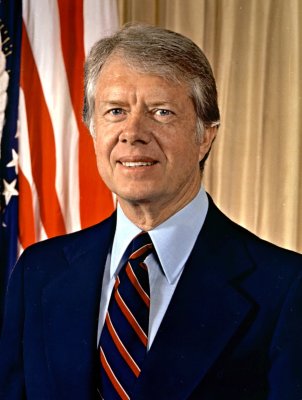
Jimmy Carter

39th President of the United States, 1977–1981; Governor of Georgia 1971–1975

Recorded said elsewhere, not written here
I wish I sent one more helicopter to get the hostages and we would have rescued then and I - I would have been re-elected, but that may have - and that may have interfered with the foundation of the Carter Center. And if I had to choose between four more years and the Carter Center, I think I would choose the Carter Center.

News conference at the Carter Center, Atlanta, as transcribed by CNN, 20 August 2015 source ↗

Others on this question

View all 203 →
Minnie Driver British and American actress
I’d edit out all the awful men I managed to find who confirmed my worst suspicions about my body and my character.
Recorded The Guardian, The Q&A, The Guardian, 4 February 2023 source ↗
Rosa Parks Civil-rights activist
As I look back on those days, it’s just like a dream. The only thing that bothered me was that we waited so long to make this protest and to let it be known wherever we go that all of us should be free and equal and have all opportunities that others should have.
Recorded Academy of Achievement interview source ↗
Suzanne Vega American singer-songwriter
I would have tried to meet Lou Reed backstage. I went to see him for years, and never tried to meet him. Eventually we met at award shows and did become friends.
Recorded The Guardian, The Q&A, The Guardian, 9 September 2017 source ↗

More from Jimmy Carter

View profile →
Question Which book reshaped how you think, and in what way? Taste & recommendation
When I was a young boy, [my schoolteacher Julia Coleman] introduced me to Leo Tolstoy's novel, "War and Peace." She interpreted that powerful narrative as a reminder that the simple human attributes of goodness and truth can overcome great power. She also taught us that an individual is not swept along on a tide of inevitability but can influence even the greatest human events.
Recorded Oslo City Hall, The Nobel Foundation, 10 December 2002 source ↗
Question What are you still hoping to finish? Death & what remains
As far as the Carter Center's concerned, I would like to see guinea worm completely eradicated before -- before I die. I'd like for the last guinea worm to die before I do. ... I think right now, we have 11 cases. We started out with 3.6 million cases. And I think we have two cases in South Sudan and one case in Ethiopia and one case in Mali and seven cases in Chad. That's all the guinea worms in the world, and we know where all of them are. So obviously, that would be my top priority.
Recorded Maria Saporta, News conference at the Carter Center, Atlanta, as transcribed by CNN, 20 August 2015 source ↗
Question What counsel has proved most valuable to you? Time & hindsight
And my sister, whose name is Ruth Stapleton, was a famous evangelist. She wrote four or five books, and she would give lectures to 50,000 people at a time. She and I had a long walk in the woods on my farm, and she said, "Jimmy, quite often, when you have a blow to your pride and a horrible defeat, you can either give up, or you can look on it as a way that God opens to you to do different and even better things."
Recorded Academy of Achievement interview, Atlanta, Georgia, 25 October 1991 source ↗
Question Does the thought of dying frighten you? Death & what remains
At first I - I felt that it was confined to my liver and that they had - the operation had completely removed it. And so I felt quite relieved. And then that same afternoon we had an MRI of my head and neck and it showed up that it was already in four places in my brain. So I would say that night and the next day, until I came back up to Emory, I just thought I had a few weeks left. But I was surprisingly at ease. You know, I've had a wonderful life. I've had thousands of friends and I've had an exciting and adventurous and gratifying existence. So I was surprisingly at ease, much more so than my wife was.
Recorded News conference at the Carter Center, Atlanta, as transcribed by CNN, 20 August 2015 source ↗
Question What became visible only after your working life slowed down or ended? Time & hindsight
I'm the only president that's ever visited Africa south of the Sahara Desert. I went to two (African) countries while I was president, and I didn't know the potential of that continent, nor the challenges that faced those people. Now I do. To a much greater extent I didn't understand the [widespread] problems in our own country, from a personal point of view. I was dealing with billions of dollars that would be allocated for education or health or welfare or housing, or whatever. But I didn't know from a personal point of view the people that actually were in need or that were the recipients of those quite often inadequate and ill-designed programs.
Recorded Academy of Achievement interview, Atlanta, Georgia, 25 October 1991 source ↗

More on failure & regret

Also answered this

Bill Clinton, Tracey Ullman, Desmond Tutu, Ian Rankin, David Hasselhoff, Sheena Easton

Search the directory for somebody in particular.

Explore further

Report this answer