Skip to content
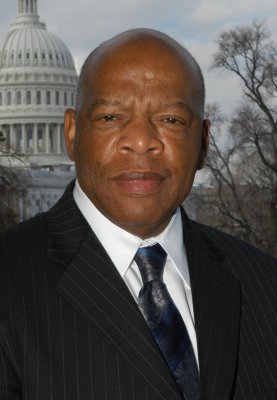
John Lewis

U.S. Representative from Georgia, 1987–2020; Chairman of the Student Nonviolent Coordinating Committee 1963–1966

Recorded said elsewhere, not written here
I never thought that we would fail or that I would fail. I knew from time to time we may make some blunders. We may make some mistakes, but we were not going to fail.

Academy of Achievement interview, Chicago, 10 June 2004 source ↗

Others on this question

View all 69 →
Well, maybe it was successful in the end. But, I mean, to get there - one of the things that I talk about is not to be afraid of failure because you're going to fail. And I was 19 years old. I was competing in the Mr. Universe contest, and I lost. I had movies that went in the toilet. I have had policy issues and referendums that went in front of the people that I lost. And, of course, in my personal life, you know, my marriage is a big loss. So there's a lot of losses and failures that I've had. And I think that it is important that we recognize that. But no matter what it is, I always had an exciting life and always chased something, and that made, to me, the whole thing worth it. I always felt I was enriched by the fact that I always knew where I was going. And then there were some things that were unexpected. Like, running for governor was something that kind of unfolded only because there was a recall election.
Recorded A Martínez, Morning Edition, NPR, 6 October 2023 source ↗
Angela Merkel Chancellor of Germany, 2005–2021; Leader of the Christian Democratic Union 2000–2018
The Berlin Wall limited my opportunities. It quite literally stood in my way. However, there was one thing which this wall couldn't do through all those years: It couldn't impose limits on my inner thoughts, my personality, my imagination, my dreams and desires.
Recorded Tercentenary Theatre, Harvard University, Cambridge, Massachusetts, The Harvard Gazette, Harvard University, 30 May 2019 source ↗
J.K. Rowling Novelist and screenwriter
So why do I talk about the benefits of failure? Simply because failure meant a stripping away of the inessential. I stopped pretending to myself that I was anything other than what I was, and began to direct all my energy into finishing the only work that mattered to me. Had I really succeeded at anything else, I might never have found the determination to succeed in the one arena I believed I truly belonged. I was set free, because my greatest fear had been realised, and I was still alive, and I still had a daughter whom I adored, and I had an old typewriter and a big idea. And so rock bottom became the solid foundation on which I rebuilt my life.
Recorded Harvard University Commencement, 2008, Harvard Gazette, 5 June 2008 source ↗
Norman Borlaug Plant pathologist and agronomist; Nobel Peace Prize, 1970
So we had to take this special exam and I flunked it. Erv Upton passed it, and I was scared. I figured if I failed it, I wouldn’t have any chance of getting in. So I failed it beautifully. ... And so it was the first year of this general college, which gave an Associate of Arts degree after two years, and that was expected to be a terminal course. It turned out it wasn’t.
Recorded Academy of Achievement recorded interview, American Academy of Achievement, 12 May 2008 source ↗

More from John Lewis

View profile →

More on failure & regret

Also answered this

Mikhail Gorbachev, Theodore Roosevelt, Mohamed ElBaradei, Wendy Kopp, Angela Merkel, Ben Bradlee

Search the directory for somebody in particular.

Explore further

Report this answer