Skip to content

The question

What makes you want to keep learning?

Originally asked

Vox, to writers and thinkers, 9 Questions, 2017

This exact prompt is one of Vox's nine recurring questions about intellectual habits.

You answer as yourself. Nobody on FLAPSS answers as anybody else.

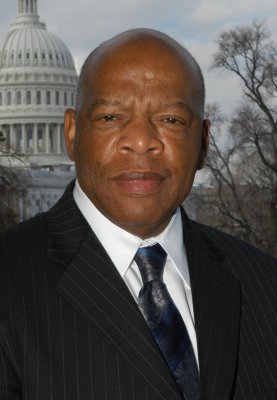
John Lewis

U.S. Representative from Georgia, 1987–2020; Chairman of the Student Nonviolent Coordinating Committee 1963–1966

Recorded said elsewhere, not written here
I wanted to know. I asked a lot of questions and she would say, "Read, read."…So she inspired me a great deal.

Julian Bond, Explorations in Black Leadership interview, Explorations in Black Leadership, University of Virginia source ↗

Others on this question

View all 9 →
Desmond Tutu Anglican Archbishop of Cape Town; chair of South Africa’s Truth and Reconciliation Commission; Nobel Peace Prize, 1984
Ultimately, it’s a man who was teaching us English Literature in what we call matricula, the last 2 years of high school. He really was quite extraordinary. When he spoke of a Shakespearean play, you almost thought that he grew up with Shakespeare! He was very good, yes. A black guy who was fantastic and gave us a deep love for literature.
Recorded Academy of Achievement interview source ↗
Richard Feynman Theoretical physicist; Nobel laureate in Physics, 1965
The questions of the students are often the source of new research.  They often ask profound questions that I’ve thought about at times and then given up on, so to speak, for a while.  It wouldn’t do me any harm to think about them again and see if I can go any further now.  The students may not be able to see the thing I want to answer, or the subtleties I want to think about, but they remind me of a problem by asking questions in the neighborhood of that problem.  It’s not so easy to remind yourself of these things.
Recorded Excerpt from “Surely You’re Joking, Mr. Feynman”, Engineering and Science / Caltech Magazine, 1985 source ↗
David Vélez Co-founder and chief executive of Nubank
I wish I knew more about Clojure, which is the programming language we use most at Nubank. If I did, I could better understand some of the more complex problems we're trying to solve, and I think I could ask better questions when we're setting priorities. I'd like to be able to communicate at that level with the technical side of our team, and I think they would appreciate it, too.
Recorded questionnaire, Sequoia Capital, 15 August 2018 source ↗
Shinya Yamanaka Stem cell biologist; Nobel laureate in Physiology or Medicine, 2012
I got very interested in so-called “knockout mouse” technology. Knockout mouse is a way to study the function of genes. You know, both human and mouse have approximately 20,000 genes. With knockout mouse technology, we can select one gene out of those 20,000 genes, and completely destroy that one particular gene so that we can understand the function of that particular gene. I got very interested in that technology. It was 1992 or 1993 when I graduated from my Ph.D. school. So I decided to study — I decided to learn about knockout mouse technology. But at that time in Japan, only a few scientists were working on knockout mouse technology. That’s why I decided to move to the States, San Francisco
Recorded Academy of Achievement interviewer, Academy of Achievement interview, 2008 source ↗

More from John Lewis

View profile →

More on attention & the world

Also answered this

Desmond Tutu, Winston Churchill, Shinya Yamanaka, Mario Molina, Christiane Nüsslein-Volhard, David Vélez

Search the directory for somebody in particular.

Explore further

Report this answer