Skip to content
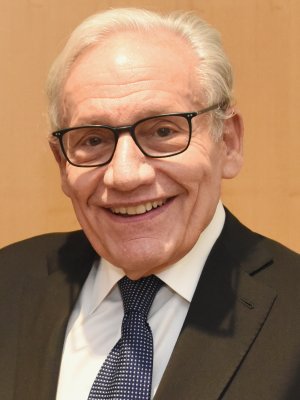
Bob Woodward

Investigative reporter and author; associate editor of The Washington Post

Recorded said elsewhere, not written here
Oh, yes, I had teachers at Wheaton. A community high school history teacher named Elizabeth Duncan who taught American history and was a great teacher. Very forceful, very insistent that we write essays to answer questions, and not short answers. Somebody who through force of personality made history interesting and important.

Academy of Achievement interview source ↗

Others on this question

View all 57 →
Eric Lander Founding director of the Broad Institute of MIT and Harvard; principal leader of the Human Genome Project
They were local. They tended to be the math teacher at junior high school, Jack Druckman, the math teacher in high school, Irene Finkel, who ran and supported the math team. They tended to be very local heroes. I was never one at those times for distant heroes and truly heroic legendary heroes. They were the local teachers who really made a huge difference in my life.
Recorded Academy of Achievement interview source ↗
Carlos Fuentes Novelist and essayist; Mexico's ambassador to France
My father was a great educator for me. He taught me so many things. He named me Carlos after a brother he lost — a very brilliant young man who died at 21 in Mexico. He had written very good poems. He was an intellectual. I think my father wanted to see his brother in me, so he put books into my hands at a very early age. He fostered my literary and artistic inclinations. So he was my best teacher.
Recorded Academy of Achievement interview source ↗
Wole Soyinka Playwright, poet and novelist; Nobel laureate in Literature, 1986
The early influence in my life I think was my father. That’s the earliest influence. He and his circle of friends. Usually, in our society, children are supposed to be neither seen nor heard. When elders are around, they’re supposed to very respectfully leave them alone. But I was curious. I just loved their debates. They used to get excited over issues, and so somehow I was allowed to eavesdrop, unlike the other children. And I picked up some of the ideas that they had, and I would ask questions. I was known as the questioner. Afterwards, I would ask questions, and my father would indulge me by trying to explain things to me. So that’s one of the reasons I consider him the earliest influence. And also, he had a small library, and I used to go into his library and try and read the books which I found there. Later on, as my circle of adult acquaintances increased, I think the next influence on me was my uncle, the Reverend I.O. Ransome-Kuti, who was another very erudite person, a great educationist. I used to visit them in Igbein, where he lived with his wife and they ran a school. So on weekends sometimes I would go there. And of course it was the usual story. I wanted to listen to them discussing and so on. Don’t misunderstand me. I was also very playful. I loved disappearing by myself, climbing trees, all that I did. But additionally, I was just fascinated by the whole discourse. Exchange of ideas between adults just used to fascinate me for some reason. I was never tired of listening to them. So my uncle was my next great influence.
Recorded Academy of Achievement interview source ↗
Desmond Tutu Anglican Archbishop of Cape Town; chair of South Africa’s Truth and Reconciliation Commission; Nobel Peace Prize, 1984
I recall when I was about nine picking up a tattered copy of Ebony magazine and I think — I mean, maybe journalists ought to know just how much power they actually have because here I was 10,000 miles away from America with this copy of Ebony magazine and it was describing the exploits of Jackie Robinson and how he broke into major league baseball. Now I didn’t know baseball from ping pong but what was so important for me, what made me grow inches was to know that a black guy had triumphed over all of the obstacles that were placed in his way and there he was now playing for something called Brooklyn Dodgers. Now I didn’t know Brooklyn Dodgers. I didn’t know Jackie, but it helped to exorcise what is the most awful consequence of racial injustice and it is the sense — this demon of self-hate when you have a very low self-esteem.
Recorded Academy of Achievement interview source ↗

More from Bob Woodward

View profile →

More on relationships

Also answered this

Ernest J. Gaines, Nora Ephron, Francis Ford Coppola, Tom Wolfe, John Grisham, Khaled Hosseini

Search the directory for somebody in particular.

Explore further

Report this answer