Skip to content
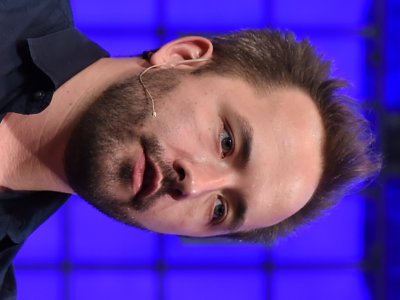
Drew Houston

Co-founder and chief executive of Dropbox

Recorded said elsewhere, not written here
I was going to say work on what you love, but that's not really it. It's so easy to convince yourself that you love what you're doing — who wants to admit that they don't? When I think about it, the happiest and most successful people I know don't just love what they do, they're obsessed with solving an important problem, something that matters to them.

MIT 147th Commencement, MIT News (Massachusetts Institute of Technology), 7 June 2013 source ↗

Others on this question

View all 32 →
Richard Feynman Theoretical physicist; Nobel laureate in Physics, 1965
For example, I was a little surprised when I was talking to a friend who was going to go on the radio. He does work on cosmology and astronomy, and he wondered how he would explain what the applications of this work were. "Well," I said, "there aren't any." He said, "Yes, but then we won't get support for more research of this kind." I think that's kind of dishonest. If you're representing yourself as a scientist, then you should explain to the layman what you're doing—and if they don't want to support you under those circumstances, then that's their decision.
Recorded Caltech commencement address, Pasadena, California, Caltech Engineering and Science (Caltech Library archive), 1 June 1974 source ↗
Rahul Dravid India Test and one-day international cricketer, 1996–2012; later India head coach
Let us not be so satisfied with the present, with deals and finances in hand that we get blindsided. Everything that has given cricket its power and influence in the world of sports has started from that fan in the stadium. They deserve our respect and let us not take them for granted. Disrespecting fans is disrespecting the game.
Recorded Bradman Oration, Anzac Hall, Australian War Memorial, Canberra, ESPNcricinfo, 14 December 2011 source ↗
Robert S. Langer Biomedical engineer; Institute Professor at MIT
I didn’t realize that scientists were like that, and that people were like that. I would have thought — and I like to hope — that I encourage people rather than discourage people. I think you can say no and still say, “Boy, that might be a tough problem, but if you really work at it maybe you’ll solve it,” rather than, “No, it will never happen.”
Recorded Academy of Achievement interview, 25 October 2012 source ↗
Sonny Rollins Jazz tenor saxophonist and composer
The life of a jazz musician is a difficult life, because you want to play, you want to be, you want to get to the inner spirit and sometimes you drink or you use drugs or you smoke a lot. You do all these things to try to get the spirit out. So it’s a difficult existence and a lot of the great people that I have known, and in history, they kind of over-indulge, and they never sort of are able to balance their musical life with their personal life. Maybe it’s not necessary to do that. That is another question, I don’t know, but I’d like to see young musicians coming up that don’t smoke and that don’t drink to excess and don’t use drugs, and don’t sort of debilitate themselves. I think that’s where we should go. I think that is what guys should be doing. I don’t think you have to drink and use drugs to play good jazz, but that’s been the model for so long that a lot of guys get caught up in that, you know.
Recorded Academy of Achievement (achievement.org) source ↗

More from Drew Houston

View profile →
Question How has a setback or failure set you up for later success? Failure & regret
No one has a 5.0 in real life. In fact, when you finish school, the whole notion of a GPA just goes away. When you're in school, every little mistake is a permanent crack in your windshield. But in the real world, if you're not swerving around and hitting the guard rails every now and then, you're not going fast enough. Your biggest risk isn't failing, it's getting too comfortable.
Recorded MIT 147th Commencement, MIT News (Massachusetts Institute of Technology), 7 June 2013 source ↗
Question In the last five years, what new belief, behaviour, or habit has most improved your life? Daily life
That night, I realized there are no warmups, no practice rounds, no reset buttons. Every day we're writing a few more words of a story. And when you die, it's not like “here lies Drew, he came in 174th place.” So from then on, I stopped trying to make my life perfect, and instead tried to make it interesting. I wanted my story to be an adventure — and that's made all the difference.
Recorded MIT 147th Commencement, MIT News (Massachusetts Institute of Technology), 7 June 2013 source ↗

More on craft & work

Also answered this

Steve Jobs, David Vélez, Tobias Lütke, Reid Hoffman, Tony Fadell, Daniel Ek

Search the directory for somebody in particular.

Explore further

Report this answer