Skip to content
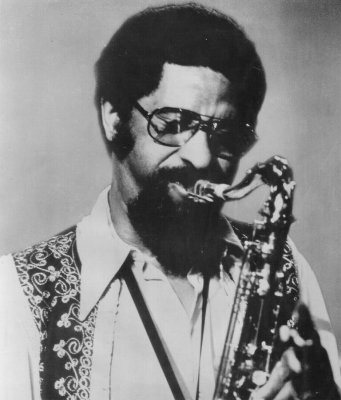
Sonny Rollins

Jazz tenor saxophonist and composer

Recorded said elsewhere, not written here
The life of a jazz musician is a difficult life, because you want to play, you want to be, you want to get to the inner spirit and sometimes you drink or you use drugs or you smoke a lot. You do all these things to try to get the spirit out. So it’s a difficult existence and a lot of the great people that I have known, and in history, they kind of over-indulge, and they never sort of are able to balance their musical life with their personal life. Maybe it’s not necessary to do that. That is another question, I don’t know, but I’d like to see young musicians coming up that don’t smoke and that don’t drink to excess and don’t use drugs, and don’t sort of debilitate themselves. I think that’s where we should go. I think that is what guys should be doing. I don’t think you have to drink and use drugs to play good jazz, but that’s been the model for so long that a lot of guys get caught up in that, you know.

Academy of Achievement (achievement.org) source ↗

Others on this question

View all 32 →
Drew Houston Co-founder and chief executive of Dropbox
I was going to say work on what you love, but that's not really it. It's so easy to convince yourself that you love what you're doing — who wants to admit that they don't? When I think about it, the happiest and most successful people I know don't just love what they do, they're obsessed with solving an important problem, something that matters to them.
Recorded MIT 147th Commencement, MIT News (Massachusetts Institute of Technology), 7 June 2013 source ↗
Indra Nooyi Chief executive of PepsiCo, 2006–2018
In order to grasp every opportunity, you cannot — you must not — decide your "career path" in advance. Don't have a job fixed in your sights and work backwards — it can be the road to disappointment because you risk passing up opportunities that might take you "off-course."
Recorded Wake Forest University commencement, 2011 source ↗
David Vélez Co-founder and chief executive of Nubank
The second thing there was another thing I learned at Sequoia is that the culture of a business is built in the first six months by the first ten to 15 employees. These are magical, really, really important times. And I used to hear a lot even at Sequoia, a lot of entrepreneurs saying, “Hey, I'm too busy to think about culture. When we become a unicorn, when we grow, I'll worry about culture.” And for whoever has kids, it's almost like saying I'm too busy about educating my kids. When they turn 18, then I'll figure it out. Too late.
Recorded John Waldron, Goldman Sachs Talks, Goldman Sachs (official event transcript) source ↗
Nick Cave Songwriter, musician and novelist
Many creative people, especially the young, may feel their chaotic or disordered relationship with the world is indispensable to their creative freedom. The more anarchic, the better! However, after considerable fieldwork in this area, I have yet to find it so. I have come to understand that the muscle of the imagination is strengthened through resistance, discipline and order.
Recorded Jai, The Red Hand Files, Issue #302, 28 October 2024 source ↗

More from Sonny Rollins

View profile →
Question What is the hardest thing that has happened to you, and what did you carry out of it? Failure & regret
I went through some really terrible times. I don’t know whether I should really even mention it, but you mentioned that I had to go to prison and all that stuff. I was in a state where they had me in a straitjacket at one time. Can you understand what it would feel like to be in a straitjacket? I know. I couldn’t either, but I was, and it was brought about by sort of a drug psychosis in prison. I mean I just went completely… But it was tough, it was tough. I mean at that time they put you in — there’s a place in New York they used to call the Tombs. You’ve probably heard of it. I mean it was like a living tomb, with all the people. So I was there, and the withdrawal — physical symptoms, which were unbelievable.
Recorded Academy of Achievement (achievement.org) source ↗
Question How would you want people to remember you? Death & what remains
I hope so, yes! The thing is that my spiritual leanings don’t accept what we would call life and death… We don’t believe in that. There is no end! There is no dying. We’re here forever! Even though your body turns to dust like everything else in this world, your soul is going to continue on. Even though I’m not able to perform music anymore, I’m still here as a human being, my soul will still be here when I’m gone — so every day I’m trying to be a good human being. And I guess whatever I accomplish in that sense will turn into the legacy of Sonny Rollins.
Recorded The Talks, 22 September 2021 source ↗
Question What made you stop something you were known for, and how did you know it was time? Time & hindsight
I realized I wasn’t sounding as good as my reputation was, so I wanted to kind of get to that point where I wouldn’t be ashamed to go on the bandstand, which happened to me one time on a job I was playing with… Elvin Jones, at that time, was the drummer playing with me. We used to go around, had a big sign, “Sonny Rollins is coming to town,” everybody was there, but I didn’t sound good, and I knew I wasn’t playing up to what I should be. So I said, “Okay, I am getting out of here. I am going to go and woodshed,” as they say, and get myself together.
Recorded Academy of Achievement (achievement.org) source ↗

More on craft & work

Also answered this

Nick Cave, Ngozi Okonjo-Iweala, John Lewis, Indra Nooyi, Michael Phelps, David Vélez

Search the directory for somebody in particular.

Explore further

Report this answer