The question

Which writers or artists most influenced your work?

Originally asked

The Paris Review, to novelists and poets, The Art of Fiction

A durable Art of Fiction question asked through named literary influences and artistic models.

You answer as yourself. Nobody on FLAPSS answers as anybody else.

Alice Sheppard

Dancer, Choreographer

Recorded said elsewhere, not written here
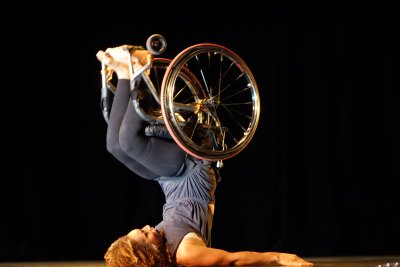
My dance heroes include Kitty Lunn, one of my first teachers, Marc Brew, current Artistic Director of AXIS Dance Company, Judy Smith founding member and Artistic Director Emerita of AXIS, and Jawole Willa Jo Zollar the founder of Urban Bush Women. They are all innovators and activists in their own way.

Sophie Griffiths, DIVA, 9 April 2020 source ↗

Others on this question

View all 71 →
François Ozon Film director and screenwriter
Truffaut, Rohmer, Claude Chabrol, they were the great directors of the Nouvelle Vague. They found the freedom to make exactly the films they wanted. Chabrol was important because he was able to make very strong portraits of women and very complex portraits of women. He was very clever and he had a lot of joy and pleasure. He didn’t have some big theories about his work, he just enjoyed making films. I try to work like that.
Recorded The Talks, published interview, 16 July 2014 source ↗
David Hare Playwright and screenwriter
My university tutor Raymond Williams.
Recorded Rob McGibbon, The Definite Article, Rob McGibbon, 27 August 2011 source ↗
Gore Vidal Novelist, essayist and playwright
I wrote a little book called Screening History , in which I go in great detail into the movies that affected me growing up. This was in the years of puberty, and so on. The Prince and the Pauper , based on Mark Twain’s novel with the Mauch twins in it. All of the propaganda films I loved, because they were political.
Recorded Academy of Achievement interview, Los Angeles, California, 3 June 2006 source ↗
Agnès Varda Film director, photographer and installation artist
Like everybody, I wanted to meet Andy Warhol. I was impressed by his work and how daring he was. I think he changed the cinema completely, simply by opening his camera and letting it go. He dealt differently with time and duration, and he didn’t care about how people would perceive it. It changed the cinema for me.
Recorded Hans-Ulrich Obrist, Interview Magazine, 5 September 2018 source ↗

More from Alice Sheppard

View profile →
Question What is something everyone in your world agrees about that you think is wrong? Values & belief
I do not consider Kinetic Light’s work radical. It is not radical to imagine a disabled audience as primary and to make the work accessible to that audience. It is not radical to situate a work within disability history, culture, and traditions. Non-disabled artists do that all the time.
Recorded Ailís Ní Ríain, Disability Arts Online, 7 September 2022 source ↗
Question How much rewriting or revision do you do? Craft & work
What I think you’re asking is, “Does it change the movements on stage if you have people come and watch it?” I would say, yes it can, but not always. Not every comment will lead me to go back to the stage and change something… but it can. Often you don’t know how stuff is landing, so it can be helpful to get a viewer’s perspective. Since I’m in the piece, I’ll never be able to see what it looks like from the outside.
Recorded T. Cole Rachel, The Creative Independent, 7 March 2018 source ↗
Question What is the biggest obstacle you have faced professionally? Craft & work
Everything. Theatres are ready for disabled audiences, more or less, but they aren’t ready for disabled artists. An example I always give is: theatres don’t always have an accessible toilet backstage, so you can’t pee before the show, or if you do you’re halfway through make-up and you have to run to the front where the audience is. The main issue is physical access, but it is improving.
Recorded Sophie Griffiths, DIVA, 9 April 2020 source ↗
Question How does a new work begin for you? Craft & work
Obviously, it’s different for everyone. And actually there is a difference for each thing I do. But one way it happens is to just move. [ laughs ] I mean, obviously, you don’t just sort of randomly throw yourself around the room. You move with these ideas and sometimes I find that I’ve already got images in my head that I imagine my body in, or sometimes I have sequences in my head. I think a lot of time I’m listening to what comes next because sometimes the body will tell you that. Often I don’t document it too early in the process because sometimes if you forget stuff it’s worth knowing that the things that you forget maybe weren’t worth keeping. The things that have settled are the things that need to be kept because they seem most urgent. I don’t know. I mean, sometimes it’s about going to the studio and nothing happens for a long time and you just sit there and you’re not feeling it. That’s awful. It’s like when you’re writing and sometimes you go to the coffee shop and you’re like, “So, we’ll just see what happens.” And you end up on Facebook. I think the answer to this is… I really think the answer to this is I don’t know. [ laughs ]
Recorded T. Cole Rachel, The Creative Independent interview, 7 March 2018 source ↗

More on taste & recommendation

Also answered this

James Cameron, Olivia de Havilland, Ja’Tovia Gary, Andy Serkis, David Lynch, Robert Wilson

Search the directory for somebody in particular.

Explore further

Report this answer