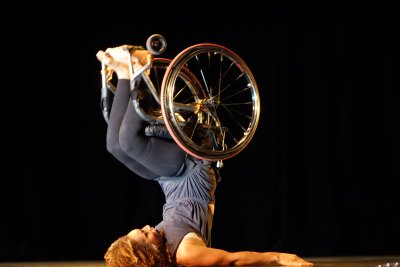
You may think it is the worst thing ever, but you will grow from it. People will forgive and forget.
Sophie Griffiths, DIVA, 9 April 2020 source ↗
The question
What is the best advice you have ever received?Originally asked
Vogue, to one guest at a time, on camera, 73 Questions
A repeated rapid-fire prompt in Vogue's 73 Questions, verified in separate English- and Korean-language episodes.
You answer as yourself. Nobody on FLAPSS answers as anybody else.
You may think it is the worst thing ever, but you will grow from it. People will forgive and forget.
Sophie Griffiths, DIVA, 9 April 2020 source ↗
And I never forgot what he said, Bill Clinton. He looked at me, and he said, “You know, Leon, you can be the greatest OMB director in the history of the world, but nobody’s going to remember you if the White House has fallen apart!” I never forgot that.
When I first met Sergeant Jackson I had grown a mustache and had taken up the affectation of smoking cigars, because I thought this made me look, you know, quite dashing and much older than my 22 years, or what have you. And the first thing that Sergeant Jackson did after I asked him to, in essence, take the insignia off, you know, just tell me straight up what I could do to improve my performance. And he told me, he said, “Well, the first thing, shave off that ridiculous mustache, and quite smoking the cigars — because you look absurd — and be yourself.” And I don’t think I ever forgot that. I don’t think I ever tried an affectation after that point in my life.
In 1972, by Farley Mowat, after I’d had a modest success: “Now you’re a target, and people will shoot at you.” Which is not about how to write, but about some of the consequences of having done so.
My dad always told me and my two brothers, “Don’t ever get too proud or too old to say that you love me and to say that you love each other.” “Love” is a pretty commonly used word in our family. When I talk to my brothers now on the phone midday, we always end the conversation saying, “I love you. I love you, bro.”
Obviously, it’s different for everyone. And actually there is a difference for each thing I do. But one way it happens is to just move. [ laughs ] I mean, obviously, you don’t just sort of randomly throw yourself around the room. You move with these ideas and sometimes I find that I’ve already got images in my head that I imagine my body in, or sometimes I have sequences in my head. I think a lot of time I’m listening to what comes next because sometimes the body will tell you that. Often I don’t document it too early in the process because sometimes if you forget stuff it’s worth knowing that the things that you forget maybe weren’t worth keeping. The things that have settled are the things that need to be kept because they seem most urgent. I don’t know. I mean, sometimes it’s about going to the studio and nothing happens for a long time and you just sit there and you’re not feeling it. That’s awful. It’s like when you’re writing and sometimes you go to the coffee shop and you’re like, “So, we’ll just see what happens.” And you end up on Facebook. I think the answer to this is… I really think the answer to this is I don’t know. [ laughs ]
My dance heroes include Kitty Lunn, one of my first teachers, Marc Brew, current Artistic Director of AXIS Dance Company, Judy Smith founding member and Artistic Director Emerita of AXIS, and Jawole Willa Jo Zollar the founder of Urban Bush Women. They are all innovators and activists in their own way.
What I think you’re asking is, “Does it change the movements on stage if you have people come and watch it?” I would say, yes it can, but not always. Not every comment will lead me to go back to the stage and change something… but it can. Often you don’t know how stuff is landing, so it can be helpful to get a viewer’s perspective. Since I’m in the piece, I’ll never be able to see what it looks like from the outside.
Do it. It is the hardest thing you will ever do and it will bring you immense joy. You won’t be alone, there is an entire community here for you.
Everything. Theatres are ready for disabled audiences, more or less, but they aren’t ready for disabled artists. An example I always give is: theatres don’t always have an accessible toilet backstage, so you can’t pee before the show, or if you do you’re halfway through make-up and you have to run to the front where the audience is. The main issue is physical access, but it is improving.
I do not consider Kinetic Light’s work radical. It is not radical to imagine a disabled audience as primary and to make the work accessible to that audience. It is not radical to situate a work within disability history, culture, and traditions. Non-disabled artists do that all the time.
Alan Dale, Hilary Swank, Andy Serkis, Ralph Fiennes, Alan Cumming, Agnès Varda
Search the directory for somebody in particular.