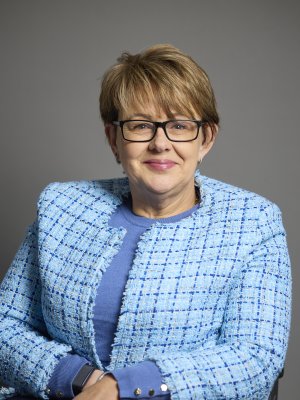
British wheelchair racer, 1988–2007; member of the House of Lords
I might have liked to have done it a couple of years later, but you'd be stupid to turn it down.
Cherwell, Oxford, UK, Cherwell, 21 November 2014 source ↗
British wheelchair racer, 1988–2007; member of the House of Lords
I might have liked to have done it a couple of years later, but you'd be stupid to turn it down.
Cherwell, Oxford, UK, Cherwell, 21 November 2014 source ↗
I've had some downturns in my career and various problems, but in fact all those kind of problems turned into something even better. It's kind of amazing, various times in my career.
Nothing in this world is worth having or worth doing unless it means effort, pain, difficulty. No kind of life is worth leading if it is always an easy life. I know that your life is hard; I know that your work is hard; and hardest of all for those of you who have the highest trained consciences, and who therefore always feel how much you ought to do. I know your work is hard, and that is why I congratulate you with all my heart. I have never in my life envied a human being who led an easy life; I have envied a great many people who led difficult lives and led them well.
I would like my architecture to inspire people to use their own resources, to move into the future.
I would like to have been concerned about this existential threat sooner.
We were training 12 to 15 times a week, 50 weeks of the year. I think sometimes people see you compete at the Paralympics or other amazing places around the world and think that is what you do all the time. There is an element of that, but a lot of it is just really boring and repetitive. The vast majority of your time as an athlete is spent on the road or in the gym.
I love training. It's not just about the competing. I had an amount of natural talent – you need that to go so far – but, actually, what I had, I think, is an ability to make myself work hard, to do the things I didn't like doing, to do the things that I wasn't so good at.
In the whole of my career, there were very few training sessions that I missed. Even when I was pregnant, I trained all the way through. I was back training when my daughter was two weeks old. You've got to commit to this, because it can be really easy to walk away from the track, convince yourself, "Oh, well, I'll do it tomorrow, I'll catch up". You can't and what I say is it's all pennies in the bank. When I say that to my daughter, she rolls her eyes at me, but you put a couple of pennies in every day and when it matters, then you've got this bank to call on, as opposed to you can't stick them all in two weeks before.
One thing that I did was race against the British men a lot and they used to push me round the road; they used to make my life really hard but then when I was racing against the best women in the world, I'd been through just about every experience you could imagine. I remember this one race – a half marathon – where my husband literally pushed me into every kerb he could find, he pushed me into every corner, you know, messed around and tried to drop me out the back of the pack. Then when you're in a race that really matters, if that happens, you've got the skills to deal with it… you need to have practised everything you possibly could in the lead up to it.
Sir Roger Bannister, Yaa Gyasi, Andrew Young, Theodore Roosevelt, Geoffrey Hinton, Stephen Sondheim
Search the directory for somebody in particular.