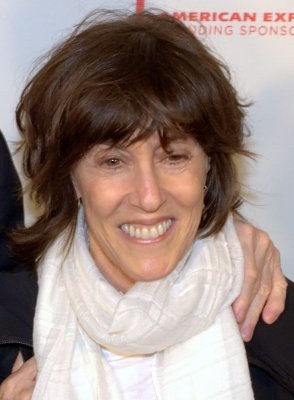
Journalist, essayist, screenwriter and film director
The movies I made that didn't work.
The Guardian, The Q&A, The Guardian, 5 September 2009 source ↗
The question
What has been your biggest disappointment?Originally asked
The Guardian, to a different person each week, The Q&A
This exact question recurs in The Guardian's institutional Q&A pool.
You answer as yourself. Nobody on FLAPSS answers as anybody else.
Journalist, essayist, screenwriter and film director
The movies I made that didn't work.
The Guardian, The Q&A, The Guardian, 5 September 2009 source ↗
That things didn’t get better.
I suspect it hasn’t happened yet.
Not being able to live my life over again with the experience I now have.
Spending over half my life under Tory rule.
I wish I had learned more from failure than just mortification. I don’t think you learn much from success, and I don’t think you learn much from failure, unfortunately. It’s one of the sad things. You certainly learn that it’s more fun to have a hit than a flop.
People think that when you write something it’s cathartic, and I had written a lot of personal articles at Esquire, and people always say, “Oh God, it must have been so great when you finally wrote about having small breasts.” No. You get through that, and then you write it. It is not the writing that is the catharsis.
My advice to everyone is: “Become a journalist.” ... if you have a chance to be a newspaper reporter for three or four years — before you do whatever you want to do — do it, because you will know so much.
Yesterday – I had a delicious tomato sandwich, on toasted sourdough bread, with mayonnaise.
Yes. I had a couple of great, great teachers. The teacher who changed my life was my journalism teacher, whose name was Charles Simms. I always tell this story. I love it. I had already decided that I was going to be a journalist. I didn’t know why exactly, except that I had seen a lot of Superman comics. Lois Lane and all of those major literary characters like that, but Mr. Simms got up the first day of class, and he went to the blackboard, and he wrote “Who, what, where, why, when, and how,” which are the six things that have to be in the lead of any newspaper story. Then he did what most journalism teachers do, which is that he dictated a set of facts to us, and then we were all meant to write the lead that was supposed to have “who, what, where, why, when, and how” in it. He dictated a set of facts that went something like, “The principal of Beverly Hills High School announced today that the faculty of the high school will travel to Sacramento, Thursday, for a colloquium in new teaching methods. Speaking there will be Margaret Mead, the anthropologist, and two other people.” So we all sat down at our typewriters, and we all kind of inverted that and wrote, “Margaret Mead and X and Y will address the faculty in Sacramento, Thursday, at a colloquium on new teaching methods, the principal announced today.” Something like that. We were very proud of ourselves, and we gave it to Mr. Simms, and he just riffled through them and tore them into tiny bits and threw them in the trash, and he said, “The lead to this story is: There will be no school Thursday!” and it was this great epiphany moment for me. It was this, “Oh my God, it is about the point! It is about figuring out what the point is.” And I just fell in love with journalism at that moment. I just fell in love with the idea that underneath, if you sifted through enough facts, you could get to the point, and you had to get to the point. You could not miss the point. That would be bad. So he really kind of gave that little shift of mind a major push.
David Lynch, Cybill Shepherd, Archie Panjabi, Bob Hoskins, Cynthia Nixon, Ardal O'Hanlon
Search the directory for somebody in particular.