Skip to content

The question

Does the thought of dying frighten you?

Originally asked

The Talks, to its interviewees, its interview series

The Talks asks this directly or through an equivalent risk-and-mortality formulation across interviews.

You answer as yourself. Nobody on FLAPSS answers as anybody else.

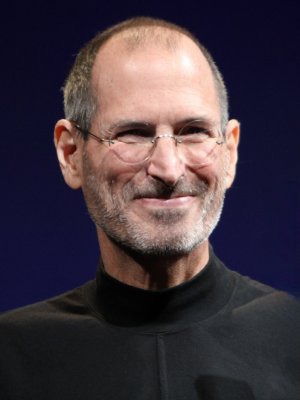
Steve Jobs

Co-founder and chief executive of Apple; co-founder of NeXT; chief executive of Pixar

Recorded said elsewhere, not written here
I've always felt that death is the greatest invention of life. I'm sure that life evolved without death at first and found that without death, life didn't work very well because it didn't make room for the young. It didn't know how the world was fifty years ago. It didn't know how the world was twenty years ago. It saw it as it is today, without any preconceptions, and dreamed how it could be based on that. We're not satisfied based on the accomplishment of the last thirty years. We're dissatisfied because the current state didn't live up to their ideals. Without death there would be very little progress.

Daniel Morrow, Smithsonian Institution Oral and Video Histories, for the Computerworld Smithsonian Awards Program, 20 April 1995 source ↗

Others on this question

View all 18 →
Warren Zevon Songwriter and musician
Somebody who won't go to the doctor for a normal checkup is fearful and nervous. ... But once you find out what it's like on the other side, you can go beyond fear.
Recorded Jon Pareles, The New York Times Magazine, 26 January 2003 source ↗
Christopher Hitchens Essayist, critic and journalist
The chief side effect of this pain is numbness in the extremities, filling me with the not irrational fear that I shall lose the ability to write. Without that ability, I feel sure in advance, my “will to live” would be hugely attenuated. I often grandly say that writing is not just my living and my livelihood but my very life, and it’s true. Almost like the threatened loss of my voice, which is currently being alleviated by some temporary injections into my vocal folds, I feel my personality and identity dissolving as I contemplate dead hands and the loss of the transmission belts that connect me to writing and thinking.
Recorded Vanity Fair, January 2012 source ↗
Simon Boas Aid worker; executive director of Jersey Overseas Aid
I'm sort of - not looking forward to my final day - of course that's the wrong way to see it. But I'm kind of curious about it, and I'm happy and I'm ready. As Julian of Norwich said: "All shall be well, and all shall be well and all manner of things shall be well.
Recorded Emma Barnett, BBC Radio 4, Today, as published by BBC News, 4 July 2024 source ↗
Jenny Diski Novelist and essayist
Missing a few months of feeling awful, being dead, versus not missing those months of feeling awful. Dead, at least theoretically, is the less painful of the two options, assuming that dead equals not being at all. Whatever terror there is lies in the present fear of dying, not so much of death. The stoics tell me that I’ve been ‘dead’ before, prior to my birth, and that was no hardship, was it? Back to Beckett, I think.
Recorded London Review of Books, 19 November 2015 source ↗

More from Steve Jobs

View profile →
Question How would you want people to remember you? Death & what remains
I think the work speaks for itself. I don't think that people have special responsibilities just because they've done something that other people like or don't like. I think the work speaks for itself. I think people could choose to do things if they want to but we're all going to be dead soon, that's my point of view. Somebody once told me, they said "Live each day as if it would be your last and one day you'll certainly be right." I do that. You never know when you're going to go but you are going to go pretty soon. If you're going to leave anything behind its going to be your kids, a few friends and your work. So that's what I tend to worry about.
Recorded Daniel Morrow, Smithsonian Institution Oral and Video Histories, for the Computerworld Smithsonian Awards Program, 20 April 1995 source ↗
Question What part of your job would surprise outsiders because it takes up so much of your time? Craft & work
My job is to not be easy on people. My job is to make them better. My job is to pull things together from different parts of the company and clear the ways and get the resources for the key projects. And to take these great people we have and to push them and make them even better, coming up with more aggressive visions of how it could be.
Recorded Betsy Morris, Fortune interview, Kona, Hawaii, March 2008 source ↗
Question What lesson has mattered most in your life? Time & hindsight
I'm convinced that about half of what separates the successful entrepreneurs from the non-successful ones is pure perseverance. It is so hard. You put so much of your life into this thing. There are such rough moments in time that I think most people give up. I don't blame them. Its really tough and it consumes your life.
Recorded Daniel Morrow, Smithsonian Institution Oral and Video Histories, for the Computerworld Smithsonian Awards Program, 20 April 1995 source ↗
Question How has a setback or failure set you up for later success? Failure & regret
I didn't see it then, but it turned out that getting fired from Apple was the best thing that could have ever happened to me. The heaviness of being successful was replaced by the lightness of being a beginner again, less sure about everything. It freed me to enter one of the most creative periods of my life.
Recorded Stanford University 114th Commencement, Stanford News (Stanford University), 12 June 2005 source ↗

More on death & what remains

Also answered this

Terry Pratchett, Jimmy Carter, Diana Athill, Roger Ebert, Henry Marsh, Jenny Diski

Search the directory for somebody in particular.

Explore further

Report this answer