Skip to content
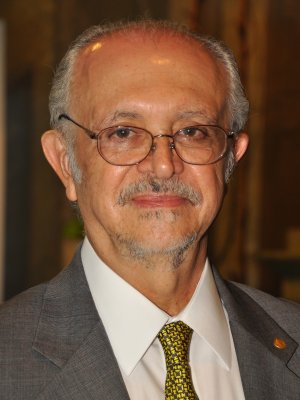
Mario Molina

Atmospheric chemist; Nobel laureate in Chemistry, 1995

Recorded said elsewhere, not written here
The advice that I would give is try to find something that you like. Try to devote your energies to being very good at it. Try to achieve excellence. Don’t necessarily have as a goal success or getting prizes or whatever, but just doing very good work. And work hard. Keep working at it. Be patient. Realize that you don’t always see the benefits of what you’re doing, short-term. But in the end, the activities that I do, for example, scientific research, can be extremely rewarding. It’s really a very fascinating career.

Academy of Achievement interview, Sun Valley, Idaho, 29 June 1996 source ↗

Others on this question

View all 78 →
Rahul Dravid India Test and one-day international cricketer, 1996–2012; later India head coach
I know it is utterly fanciful to expect professional cricketers to play the game like amateurs; but the trick, I believe, is taking the spirit of the amateur - of discovery, of learning, of pure joy, of playing by the rules - into our profession. Taking it to practice or play, even when there's an epidemic of white-line fever breaking out all over the field.
Recorded Bradman Oration, Anzac Hall, Australian War Memorial, Canberra, ESPNcricinfo, 14 December 2011 source ↗
Reid Hoffman Co-founder of LinkedIn; partner at Greylock Partners
The challenge of a big, over-arching vision is that it's hard to know where to start. And your biggest opportunity will change from year to year. Technology changes. Competition changes. You change. My advice: Just start. Find a single unmet need that nudges the world closer to where you believe it's going. And if you hit a dead end, pivot.
Recorded Hoffman's own Medium publication, Reid Hoffman on Medium source ↗
Abby Wambach United States international footballer, 2001–2015
I stayed on the path out of fear, not of being eaten by a wolf, but of being cut, being benched, losing my paycheck. If I could go back and tell my younger self one thing it would be this: "Abby, you were never Little Red Riding Hood; you were always the wolf."
Recorded Barnard College commencement address, Radio City Music Hall, New York, Speakola, 16 May 2018 source ↗
Aung San Suu Kyi Leader of the National League for Democracy; Nobel Peace Prize laureate; State Counsellor of Myanmar, 2016–2021
Every kindness I received, small or big, convinced me that there could never be enough of it in our world. To be kind is to respond with sensitivity and human warmth to the hopes and needs of others. Even the briefest touch of kindness can lighten a heavy heart.
Recorded Oslo City Hall, The Nobel Foundation, 16 June 2012 source ↗

More from Mario Molina

View profile →
Question Which problem are you still chipping away at? Craft & work
I certainly want to continue trying to understand how the global environment functions. The earth as a system is a very complicated one. And to understand it, we need very many disciplines, very many different scientists working together. I want to continue working with my specialty, which is chemistry, with the atmosphere. There is still much to learn about chemical reactions that occur out there in the air, in the atmosphere. So one of my projects now is to really learn more about this pollution that occurs in cities and that is spreading more through the globe. To learn it in enough detail so we can better tackle it, we can better come up with new ways of using energy, for example, that are not so damaging to the environment.
Recorded Academy of Achievement interview, Sun Valley, Idaho, 29 June 1996 source ↗
Question How has a setback or failure set you up for later success? Failure & regret
At first the research did not seem to be particularly interesting – I carried out a systematic search for processes that might destroy the CFCs in the lower atmosphere, but nothing appeared to affect them. We knew, however, that they would eventually drift to sufficiently high altitudes to be destroyed by solar radiation. The question was not only what destroys them, but more importantly, what the consequences are.
Recorded Laureate-written autobiography, provided by the laureate in November 2007, Nobel Prize Outreach, 1 November 2007 source ↗
Question What is the biggest professional obstacle you have faced? Craft & work
In terms of this issue of these industrial gases affecting the environment, at the beginning the road was not easy, because we were suggesting that society had to change, that industries had to do something different than they were doing at that time. And of course, initially we did not meet with a good reception to these ideas from industry. And even from the scientific community — even though our ideas were well received in the small group of specialists in what we were doing — it was not necessarily well received by the scientific community at large. So we really had to continue doing as good a science as we could, and at the same time trying to well communicate our conviction that it was something important, something that had to change in the way society was functioning.
Recorded Academy of Achievement interview, Sun Valley, Idaho, 29 June 1996 source ↗

More on time & hindsight

Also answered this

Richard Feynman, Norman Borlaug, Frederick Sanger, George Schaller, Ellen Ochoa, Shinya Yamanaka

Search the directory for somebody in particular.

Explore further

Report this answer