The question

What is the biggest obstacle you have faced professionally?

Originally asked

The American Academy of Achievement, to its honourees, its oral-history interviews

The Academy of Achievement repeatedly asks honorees to identify a major professional obstacle or challenge and describe confronting it.

You answer as yourself. Nobody on FLAPSS answers as anybody else.

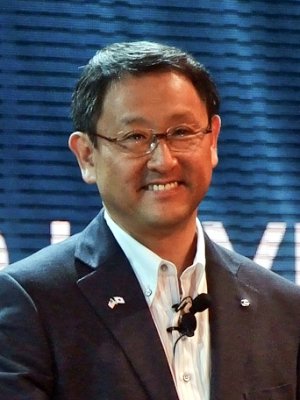
Akio Toyoda

President of Toyota Motor Corporation, 2009–2023; chairman from 2023

Recorded said elsewhere, not written here
I was raised not to dream. I was told to live for others, so I don’t have many dreams, but I face countless obstacles and challenges. Arrogance, conflict, criticism, insults, inaction. At Toyota, there was so much rationalizing of why things couldn’t be done. As if doing nothing was the best option.

overseas dealer representatives and guests, Akio Toyoda’s Juku, Toyota Times, 14 November 2023 source ↗

Others on this question

View all 39 →
Ephraim Asili Filmmaker, Educator, and DJ
I tried to get funding to shoot this film and couldn’t—nobody wanted to touch it, you know?
Recorded Merawi Gerima, Filmmaker Magazine, 10 March 2021 source ↗
Pete Rozelle Commissioner of the National Football League, 1960–1989
That was a direct challenge to the NFL constitution, which said you have to have a three-quarters approving vote if you’re going to move your franchise. And we had Davis challenge that in his move from Oakland to Los Angeles. And it was sitting there in the constitution, and I couldn’t just say, “Oh, I’m not going to press this.” I brought it to the attention of the owners, and I said, “I think we have to defend this constitution.” So we had two trials over a couple of years.
Recorded Rancho Santa Fe, California, Academy of Achievement, 15 May 1991 source ↗
Mario Molina Atmospheric chemist; Nobel laureate in Chemistry, 1995
In terms of this issue of these industrial gases affecting the environment, at the beginning the road was not easy, because we were suggesting that society had to change, that industries had to do something different than they were doing at that time. And of course, initially we did not meet with a good reception to these ideas from industry. And even from the scientific community — even though our ideas were well received in the small group of specialists in what we were doing — it was not necessarily well received by the scientific community at large. So we really had to continue doing as good a science as we could, and at the same time trying to well communicate our conviction that it was something important, something that had to change in the way society was functioning.
Recorded Academy of Achievement interview, Sun Valley, Idaho, 29 June 1996 source ↗
Alan Shepard Naval aviator and astronaut; the first American in space and the fifth person to walk on the Moon
Oh, absolutely. I was delighted when I was assigned command of the first Gemini flight with Tom Stafford as my co-pilot, but it was shortly after that I developed a disorientation problem in my ear, and NASA grounded me. I was grounded for almost six years.
Recorded Houston, Texas, Academy of Achievement, 1 February 1991 source ↗

More from Akio Toyoda

View profile →

More on craft & work

Also answered this

Larry Ellison, Henry R. Kravis, Sundar Pichai, Kiran Mazumdar-Shaw, Mellody Hobson, Clive James

Search the directory for somebody in particular.

Explore further

Report this answer