Skip to content

The question

What is the biggest professional obstacle you have faced?

Originally asked

The American Academy of Achievement, to its honourees, its oral-history interviews

The Academy of Achievement repeatedly asks honorees to identify a major professional obstacle or challenge and describe confronting it.

You answer as yourself. Nobody on FLAPSS answers as anybody else.

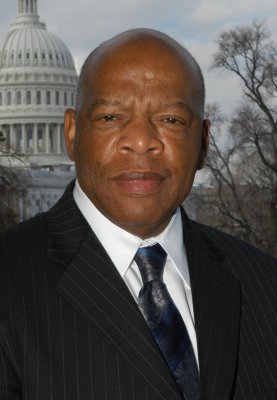
John Lewis

U.S. Representative from Georgia, 1987–2020; Chairman of the Student Nonviolent Coordinating Committee 1963–1966

Recorded said elsewhere, not written here
More than anything else, I had to combat the barriers, and we tore down those barriers. I just had to set a sail against the wind, those strong winds, to end segregation and racial discrimination, but somehow, in some way, I didn’t let those barriers keep me down.

Academy of Achievement interview, Chicago, 10 June 2004 source ↗

Others on this question

View all 24 →
Richard Feynman Theoretical physicist; Nobel laureate in Physics, 1965
At Cornell, I’d work on preparing my courses, and I’d go over to the library a lot and read through the Arabian Nights and ogle the girls that would go by.  But when it came time to do some research, I couldn’t get to work.  I was a little tired; I was not interested; I couldn’t do research!  This went on for what I felt was a few years, but when I go back and calculate the timing, it couldn’t have been that long.  Perhaps nowadays I wouldn’t think it was such a long time, but then, it seemed to go on for a very long time.  I simply couldn’t get started on any problem: I remember writing one or two sentences about some problem in gamma rays and then I couldn’t go any further.  I was convinced that from the war and everything (the death of my wife) I had simply burned myself out.
Recorded Excerpt from “Surely You’re Joking, Mr. Feynman”, Engineering and Science / Caltech Magazine, 1985 source ↗
Tom Lubbock Art critic
For me, no word comes without prior thought. No sentence is generated without effort. No formulation is made automatically. I am faced continually with a mystery that other people have no conception of, the mystery of the generation of speech. There is no command situation, it goes back and back and back. Where the self lies at the heart of the utterance, the speaker generating the word, is always clouded. This is true for everyone, but for most people this is not something to think about. The generation of words is automatic. For me, that automatic link is broken. Word generation involves strain, guesswork, difficulty, imprecision.
Recorded The Observer, from the journals he kept between 2008 and 2010, 7 November 2010 source ↗
Mohamed ElBaradei Director General of the International Atomic Energy Agency, 1997-2009; Nobel Peace Prize 2005
No. Unfortunately, it hasn’t worked out quite that way. At that time, everybody was euphoric that we will have a new world order, you know, a world order that does not rely on nuclear weapons, nuclear deterrence. Unfortunately, it didn’t work that way. ... We still have thousands of warheads in existence. We still have more than 20 — 30 countries relying on nuclear deterrence for their own survival.
Recorded Academy of Achievement interview, 2006 source ↗
Tony Judt Historian and essayist
This cockroach-like existence is cumulatively intolerable even though on any given night it is perfectly manageable. “Cockroach” is of course an allusion to Kafka’s Metamorphosis, in which the protagonist wakes up one morning to discover that he has been transformed into an insect. The point of the story is as much the responses and incomprehension of his family as it is the account of his own sensations, and it is hard to resist the thought that even the best-meaning and most generously thoughtful friend or relative cannot hope to understand the sense of isolation and imprisonment that this disease imposes upon its victims.
Recorded The New York Review of Books, 14 January 2010 issue, 14 January 2010 source ↗

More from John Lewis

View profile →
Question Which writers or artists have most influenced your work? Taste & recommendation
Jim Lawson. Jim Lawson was an unbelievable human being. Born in Ohio. He was a pacifist. He studied Gandhi. He was part of the Methodist Student Movement. He lived in India. He became an organizer for FOR, the Fellowship of Reconciliation.
Recorded Julian Bond, Explorations in Black Leadership interview, Explorations in Black Leadership, University of Virginia source ↗

More on craft & work

Also answered this

Edmund Hillary, Bill Clinton, Mohamed ElBaradei, Larry Ellison, John Clauser, Sundar Pichai

Search the directory for somebody in particular.

Explore further

Report this answer