Skip to content
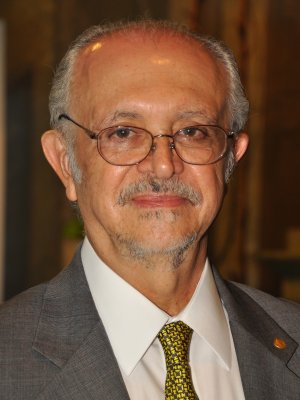
Mario Molina

Atmospheric chemist; Nobel laureate in Chemistry, 1995

Recorded said elsewhere, not written here
It’s easy to try to exaggerate the problems just to get more attention. So for me, it was very clear that the best way to deal with that was to do the best science that I was capable of doing.

Academy of Achievement interview, Sun Valley, Idaho, 29 June 1996 source ↗

Others on this question

View all 30 →
Werner Herzog Film director, screenwriter and opera director
It’s how we are made as homo sapiens. We are biologically organized to cover distances on foot. That’s what we did for tens of thousands of years until we started to use horses, of course, until the mechanical age. And I would not call it “walking” because it’s not going out for a stroll or going out for a “power walk” or ambling in your city. It’s “traveling on foot.” You are reading the world, learning the essence of the world.
Recorded National Geographic, National Geographic, interview conducted via Zoom, 1 January 2020 source ↗
Yvon Chouinard Founder of Patagonia
One option was to sell Patagonia and donate all the money. But we couldn't be sure a new owner would maintain our values or keep our team of people around the world employed. Another path was to take the company public. What a disaster that would have been. Even public companies with good intentions are under too much pressure to create short-term gain at the expense of long-term vitality and responsibility. Truth be told, there were no good options available. So, we created our own.
Recorded Open letter published by Patagonia, 14 September 2022 source ↗
Christiane Nüsslein-Volhard Developmental biologist; Nobel laureate in Physiology or Medicine, 1995
They were blocked in their minds to do this because they thought, oh this is not done, we don’t do that in our field and you can’t do that, and I said: Why not?
Recorded Marika Griehsel, Interview at the 53rd Lindau Nobel Laureate Meeting, 30 June–4 July 2003, Nobel Prize Outreach, 1 July 2003 source ↗
Wole Soyinka Playwright, poet and novelist; Nobel laureate in Literature, 1986
That’s a very good question. I think I’m a very lazy writer and by that I mean that I do not battle, I don’t struggle too hard against it. If I have difficulties in the writing, I just go and do other things. I don’t feel a compulsion to write. Of course, when I start writing then it becomes a compulsive activity, because I’ve begun something and I want to continue, want to finish it. … I know there are other writers who sit down religiously every morning, they take their espresso, they put a clean sheet of paper there and they sit looking at that paper until they’ve finished or covered at least a number of those pages. No, I’m not like that. I have to be ready. It has to gestate it for quite a while and then it’s ready to burst forth.
Recorded Simon Stanford, NobelPrize.org (Nobel Prize Outreach), 28 April 2005 source ↗

More from Mario Molina

View profile →
Question What is the worst advice you followed anyway? Failure & regret
I did. As a kid, I liked music. I still like it a lot of course. I used to play the violin. I did contemplate, well, maybe that’s an option. I could become a musician. Somehow my parents got some advice that unless I was willing to spend eight or 10 hours a day just playing the violin that I should just give it up. To me, that was very bad advice because you could of course, get very involved in music without being a musician. Fortunately, even though I gave up eventually playing the violin myself, I never gave up my fondness for music. But if I had a chance again, I would not give it up. I would just do it as a hobby. I think that was just because I did not get the correct advice.
Recorded Adam Smith, Nobel Prize Talks, recorded April 2014; re-released as Nobel Prize Conversations, Nobel Prize Outreach, 11 April 2014 source ↗
Question What part of your job would surprise outsiders because it takes up so much of your time? Craft & work
Although my years at Irvine were very productive, I missed not doing experiments myself because of the many responsibilities associated with a faculty position: teaching courses, supervising graduate students, meetings, etc. After spending seven years at Irvine as Assistant and then Associate Professor, I decided to move to a non-academic position. I joined the Molecular Physics and Chemistry Section at the Jet Propulsion Laboratory in 1982. I had a smaller group – only a few postdoctoral fellows – but I also had the luxury of conducting experiments with my own hands, which I enjoyed very much.
Recorded Laureate-written autobiography, provided by the laureate in November 2007, Nobel Prize Outreach, 1 November 2007 source ↗
Question What counsel would you give your twenty-year-old self — and what should they ignore? Time & hindsight
The advice that I would give is try to find something that you like. Try to devote your energies to being very good at it. Try to achieve excellence. Don’t necessarily have as a goal success or getting prizes or whatever, but just doing very good work. And work hard. Keep working at it. Be patient. Realize that you don’t always see the benefits of what you’re doing, short-term. But in the end, the activities that I do, for example, scientific research, can be extremely rewarding. It’s really a very fascinating career.
Recorded Academy of Achievement interview, Sun Valley, Idaho, 29 June 1996 source ↗

More on values & belief

Also answered this

Richard Hamming, Oliver Sacks, Anthony Fauci, Christiane Nüsslein-Volhard, Tom Stoppard, David Oyelowo

Search the directory for somebody in particular.

Explore further

Report this answer