Skip to content

The question

What is the biggest professional obstacle you have faced?

Originally asked

The American Academy of Achievement, to its honourees, its oral-history interviews

The Academy of Achievement repeatedly asks honorees to identify a major professional obstacle or challenge and describe confronting it.

You answer as yourself. Nobody on FLAPSS answers as anybody else.

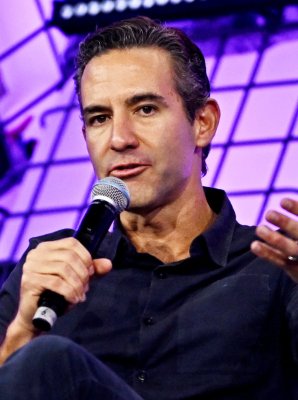
David Vélez

Co-founder and chief executive of Nubank

Recorded said elsewhere, not written here
Sí, empezamos desde cero. Pedimos una licencia de financiamiento comercial, pero es difícil comenzar porque la banca se basa en confianza, regulación y escala. Hay barreras regulatorias que dificultan la entrada de nuevos jugadores. Es un sector históricamente cerrado, que favorece a los incumbentes. Aun así, logramos construir una marca fuerte y generar confianza en los consumidores.

Alejandra Rico Muñoz, interview, La República, 25 March 2026 source ↗

Others on this question

View all 24 →
Tom Lubbock Art critic
For me, no word comes without prior thought. No sentence is generated without effort. No formulation is made automatically. I am faced continually with a mystery that other people have no conception of, the mystery of the generation of speech. There is no command situation, it goes back and back and back. Where the self lies at the heart of the utterance, the speaker generating the word, is always clouded. This is true for everyone, but for most people this is not something to think about. The generation of words is automatic. For me, that automatic link is broken. Word generation involves strain, guesswork, difficulty, imprecision.
Recorded The Observer, from the journals he kept between 2008 and 2010, 7 November 2010 source ↗
Shinya Yamanaka Stem cell biologist; Nobel laureate in Physiology or Medicine, 2012
my second failure in my career. But that second failure got me interested in knockout mice, mouse technology. So I think failure is important in my career
Recorded Academy of Achievement interviewer, Academy of Achievement interview, 2008 source ↗
Larry Ellison American businessman
There were lots of times, especially in the early days, that were very, very difficult. I think the most difficult experience I had was in 1990 when Oracle had its only loss quarter in history. We’d been in business for 20 years, and after 20 years we lost money one quarter. We had a very difficult time. We had virtually doubled our sales every year for ten years. Nine out of ten years, ten out of eleven years. It was really quite an amazing run. We were the fastest growing company in history
Recorded Academy of Achievement, Academy of Achievement interview, San Francisco, California, 1 May 1997 source ↗
Katalin Karikó Biochemist; Nobel laureate in Physiology or Medicine, 2023
Adam, if you know about 10 years ago, I was here in October because I was kicked out, from Penn, was forced to retire. Then my husband supported me and said that, you know, when finally visited in Germany and found that maybe BioNTech is the right place, then he said "Just try it and I will make sure that you don't regret." Looking back in my life he supported that I would go, and for nine years I commuted to BioNTech in Germany. I did all these experiments actually, with my own hands, I was 58 years old, I was still culturing plasmids and feeding cells, so it is very unlikely.
Recorded Adam Smith, Telephone interview recorded shortly after the prize announcement, October 2023, Nobel Prize Outreach, 1 October 2023 source ↗

More from David Vélez

View profile →
Question What bad recommendations do people in your field repeat too often? Craft & work
The second thing there was another thing I learned at Sequoia is that the culture of a business is built in the first six months by the first ten to 15 employees. These are magical, really, really important times. And I used to hear a lot even at Sequoia, a lot of entrepreneurs saying, “Hey, I'm too busy to think about culture. When we become a unicorn, when we grow, I'll worry about culture.” And for whoever has kids, it's almost like saying I'm too busy about educating my kids. When they turn 18, then I'll figure it out. Too late.
Recorded John Waldron, Goldman Sachs Talks, Goldman Sachs (official event transcript) source ↗
Question What does everyone in your world seem to agree on that you think is wrong? Values & belief
I always say the Nubank story was very unlikely. It was a very low probability event. Again. We were going after these very big incumbent banks. Everybody told me, you know, you're Colombian. You have no idea what you're doing in Brazil. They're going to crush you. Like, don't. Just don't do it. And I did it mostly because everybody told me I couldn't do it. And so, if somebody tells me I can't do something, I want to go do it.
Recorded John Waldron, Goldman Sachs Talks, Goldman Sachs (official event transcript) source ↗
Question Who alive today do you admire most, and what draws you to them? Values & belief
Vicky, qué pregunta más difícil (risas). Voy a hablarle de los casos que nos han inspirado, como Charles Feeney, cofundador de los Duty Free Shop en los aeropuertos. Él hizo eso en los años ochenta. Se volvió uno de los hombres más ricos del mundo cuando vendió su compañía e inmediatamente se dedicó a la filantropía y gastó todo su dinero en metas sociales.
Recorded Vicky Dávila, interview, Semana, 1 October 2022 source ↗
Question When you feel overwhelmed or unfocused, what do you do? Daily life
Now I try to protect one hour in the morning and one in the afternoon where I turn off Slack, and I don't check email. I might read, or write in a journal, or just go for a walk. It's become one of the most important parts of my day. It's when I'm most creative, and when I hit on ideas that can take the company in new directions.
Recorded questionnaire, Sequoia Capital, 15 August 2018 source ↗

More on craft & work

Also answered this

Steve Jobs, Sundar Pichai, Mellody Hobson, John M. Martinis, Tony Judt, Hilary Swank

Search the directory for somebody in particular.

Explore further

Report this answer